Time flies with great content! Renew in to keep enjoying all our premium content.
Prime
Silence and rejection: The job plight of Kenyans schooled in Russia
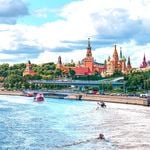
View of Moscow from the observation deck of Children’s World, featuring the Kremlin, Moscow State University, Cathedral of Christ the Savior, and city rooftops.
To become the best in his field, Thalo Harrison knew early on he had to learn from the best. The reasoning was simple — in a job market that churns out top graduates from local universities only for many to struggle for work, he believed his odds would improve if he trained at the highest global standard. Cybersecurity was evolving rapidly, and Russia offered a world-class program.
A few years later, degree in hand, Thalo returned to Kenya confident he would be competitive. Instead, he got a rude shock. Employers told him he was “overqualified.” Others said he lacked local experience.

Some simply stopped responding after seeing his credentials. Months of applications and interviews yielded little success. Thalo’s journey abroad had been far from easy.
After winning a government scholarship in 2018, delays meant he only departed in 2019. He spent a year learning Russian before starting a Master’s in cybersecurity at the National Research Nuclear University MEPhI.
While he was the only African in his class, he threw himself into his studies, balancing occasional remote work and tutoring to cover living costs. By 2022, he graduated, confident about returning home, a confidence that would soon be tested.
Working without pay
For four months, Thalo navigated Kenya’s labour market, sending countless applications to banks, insurance companies, and telecoms firms. Some interviews ended abruptly when salary expectations were discussed.
Thalo Harrison, 31, lecturer at Strathmore University and cybersecurity consultant, holds a Master’s in Cyber Security from Russia’s National Research Nuclear University MEPhI.
Photo credit: Pool
“Some employers told me I was overqualified. Others wanted entry-level candidates,” he says. Even roles that seemed perfect on paper failed to materialise into offers.
His breakthrough came gradually. He first helped his former university design a cybersecurity curriculum, teaching classes without pay.
Later, a friend told him about an opportunity at Strathmore University. One morning, he went to the university without an appointment and personally inqured about the opening.
Like many other jobseekers, he was asked to email his CV and sent it a week later, hoping for more than just a formal reply. An academic director responded to say that they were looking for someone specialising in cybersecurity.
The interviews were in several stages. He was asked technical questions. He also spoke about his experience in Russia. “I developed a passion for lecturing, and the money followed,” he says.
Too qualified for internship
Like Thalo, Agnes Wanjiku returned from Russia with advanced technical training, only to find doors closed. She left in 2007 on a government scholarship for electrical and electronics engineering.
Agnes Wanjiku, 39, lecturer of Electrical and Electronics Engineering at Dedan Kimathi University of Technology, earned her Bachelor’s and Master’s degrees in Russia.
Photo credit: Pool
Life in Russia, she says, was challenging: intensive language courses, small stipends, and working odd jobs to make ends meet.
Yet she persevered, completing her undergraduate studies in Kazan and later a PhD in Hungary.
When Agnes returned to Kenya in 2014, the promise of opportunity did not materialise.
"It was very frustrating," she says quietly. She applied for many jobs at engineering companies. She knocked on doors. She sent applications repeatedly. In most places, the answer was the same.
“Most companies told me I was overqualified. I even tried to apply for an internship, and they said I was overqualified for that too,” she recalls.
In some cases, recruiters advised her to hide her advanced degrees to appear more “suitable” for entry-level roles.
“I was even told, ‘Maybe you should just use your bachelor's degree for now, and then once you're employed, you can produce your master's,’” she says.
Eventually, she accepted a part-time teaching role at Dedan Kimathi University in 2015. Although it was not her dream job, it allowed her to apply her skills and gain local experience.
One year later, in 2016, another opportunity arose. She received a scholarship to pursue a PhD in vehicle engineering and transport in Hungary. She signed an agreement with her university and left again.
Her PhD took about four years. She defended her thesis in November 2020, and received her certificate in January 2021. Upon returning to Kenya in 2021, she resumed her teaching job. This time, she came back not as a job seeker, but as Dr Agnes Wanjiku.
Her Russian accent is still audible in class. Sometimes she pronounces formulas the Russian way, which makes her students laugh. “I actually call myself Afro-Russian because the culture runs deep in me,” she says.
Starting from scratch
Kadanya Bringson’s story illustrates another path. Arriving in Russia with minimal resources, he quickly realised survival required creativity.
Kadanya Bringson, 34, is a consultant connecting Russian companies, investors, and tourists with opportunities in Kenya. He studied in Russia, initially in Mechanical Engineering, and earned a Master’s degree in Physics in 2020.
Photo credit: Pool
He learned the language, freelanced in photography and graphic design to supplement his stipend, and graduated with a Master’s in Physics during the pandemic in 2020.
Back in Kenya, he initially faced unpaid lecturing roles, surviving on savings of around Sh52,000.
Over time, he leveraged his Russian language skills to build a consultancy, connecting Russian investors with Kenyan opportunities.
Today, at 34, he is financially stable and professionally secure, a long way from the young man who was forced to sell his few wordly possessions just to afford an air ticket.
He recalls. stumbled upon an opportunity to study in Russia on a scholarship, he seized it without hesitation. He sold his television, home theatre system and some furniture to raise Sh42,000 for the flight. He had not finished school and felt that he was stuck in life. He grabbed the opportunity to make a fresh start.
“When I got there, I had spent all my money. So I started from scratch,” he says.
Luckily for him, the visa process was straightforward thanks to the scholarship.
“As soon as you get a scholarship, everything becomes easy. There are no complications.”
The sponsorship covered tuition and insurance, as well as providing him with a small monthly stipend of Sh6,700. He lived in a student hostel, but he still had to work hard to make ends meet.
After graduating with a Master's in Physics in 2020, during the period of the pandemic, he wanted to return home. “I believed there were better opportunities for me to grow back home,” he said.
When he returned, he began his job search. He applied for lecturing jobs many times. He sent applications, followed up, and waited. Some places never replied. Others promised and then went quiet. Finally, he got a position at the Multimedia University of Kenya, but left shortly after to focus on his consultancy.
For Thalo, Agnes, and Kadanya, navigating the job search challenges as returnees required a combination of resilience, creativity, and adaptability. They leveraged networks built abroad, explored teaching, consultancy, and entrepreneurship, and sometimes had to recalibrate expectations to match opportunities.