Time flies with great content! Renew in to keep enjoying all our premium content.
Prime
Mobitelea sells stake in Safaricom for Sh6 billion
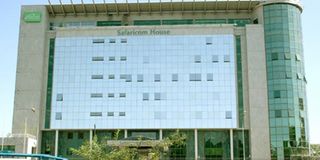
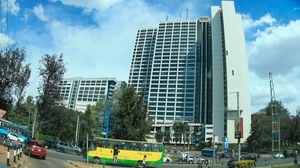
Safaricom House. Furore over who could be the owners of the stake peaked last year prior to Safaricom’s listing on the Nairobi Stock Exchange when it emerged that the mysterious group of investors had been benefiting from the company’s meteoric rise in the fast expanding mobile industry.
The shadowy individuals behind Mobitelea, the company that owned a five per cent stake in Safaricom, have harvested more than Sh6 billion through the sale of the two billion shares they held in Kenya’s most profitable company to UK’s Vodafone Plc.
It is not clear when the sale took place but analysts said Vodafone’s reporting of the matter in its 2009 financial results means that it took place after the listing of Safaricom at the Nairobi Stock Exchange in June last year.
“During the year ended March 31, 2009, under an agreement with Mobitelea Ventures Limited, the group completed the purchase of a five per cent indirect equity stake in Safaricom increasing its effective interest in Safaricom to 40 per cent,” says a statement in the 2009 Vodafone Annual Financial Report.
Analysts said Safaricom would have had to declare the sale in the prospectus it issued to investors in the run up to the IPO, if the sale had taken place earlier.
Selling the stake after the listing should also have helped the parties to discover the true value of the shares, which would have been difficult for a company in a fast growing market such as telecoms.
Safaricom shares have been trading at between Sh7.35 in June when it first debuted in the market and Sh3 as at March 31, when Vodafone closed its financial year and valued its 40 per cent stake at Sh48 billion.
This means that the shadowy investor who owned two billion shares pocketed between Sh6 billion and Sh14 billion depending on when they offloaded their stake.
The share traded at Sh3.75 at the Nairobi Stock Exchange (NSE) on Tuesday, Sh1.25 below the IPO price of Sh5.
The sale to Vodafone firmly puts the lid on the identity of the individuals behind the company that have eluded Kenyan and UK investigators for more than two years.
Michael Joseph the Safaricom CEO declined to comment on the matter, arguing it was a Vodafone issue.
“I am sorry but I am not in a position to comment as this is a Vodafone matter.”
Conclusion of the sale effectively puts an end to any future investigations into the company’s owners and ends the mysterious firm’s 10-year presence as a shareholder in Kenya’s most profitable business.
Furore over who could be the owners of the stake peaked last year prior to Safaricom’s listing on the Nairobi Stock Exchange when it emerged that the mysterious group of investors had been benefiting from the company’s meteoric rise in the fast expanding mobile industry.
At the time, it Mobitelea shared share-holding in Safaricom with the government and Vodafone, and was pocketing dividends of around Sh100 million a year. In 2008, a Sh2 billion dividend was shared between the three shareholders, with the directors of Mobitelea taking home Sh100 million.
It has never been clear how Mobitelea secured its stake in Safaricom and the issue has brought to light questions over how multinationals break into emerging markets such as Kenya.
“The sale is a clear indication that British standards of corporate governance are not up to scrutiny. This is a glaring admission of corruption on their part,” said Justin Muturi, a former MP who chaired the parliamentary Public Investments Committee (PIC), which attempted to investigate Mobitelea for five years.
A report tabled by the PIC advised against last year’s public offer of Safaricom shares until the true identity of Mobitelea’s shareholders was revealed to the Kenyan public but the government ignored it and went ahead with the sale.
Investigations to unmask the faces behind the company were foiled both in Kenya and in the UK, where Vodafone is based.
Vodafone told Mr Muturi’s PIC that Mobitelea was allowed to invest in Safaricom “in return for its valued advice,” Estimates indicate that Mobitelea was given $5 million in cash as well as a 10 per cent stake in return for its services.
Investigations by the British Government fizzled out last year after the country’s Serious Fraud Office said the case was “difficult to investigate.”
The office said it would be a waste of resources to allocate funds for a fact-finding mission that would not be successful.
Governments around the world are investigating whether international firms operating in developing countries are either forced to bribe officials to operate or whether they deliberately solicit favours from officials to gain a competitive advantage.
Recently, infrastructure provider Siemens pleaded guilty to massive “accounting violations” which included bribing officials of the countries it operated in.
It was forced to pay out $1.6 billion in fines last year, the largest amount ever paid by a multinational for bribery in modern corporate history.
Reportedly, the company used to commit between $40 million and $50 million a year to butter up to corrupt government officials worldwide.
“I believe the government through the Treasury was duty bound to carry out due diligence to establish who Mobitelea was.
Mobitelea was a clear case of the contravention of good corporate governance guidelines,” said Mr Muturi.