African Development Bank-backed, Africa50, and India’s PowerGrid Corporation inked Kenya’s first Public Private Partnership (PPP) for building high voltage electricity transmission lines.
They will build 230 kilometres of transmission lines in the Rift Valley and western Kenya for Sh40.4 billion and recoup their investments via power bills over the next 30 years.
The push comes amid a cash crunch in government that has triggered new ways of funding roads, power plants and dams.
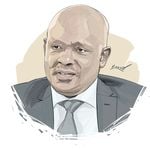
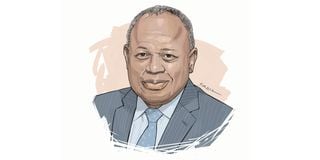
Alain Ebobissé, the Chief Executive Officer of Africa50 talked to Business Daily on the use of private money to build utilities, tolling and plugging the infrastructure gap in Kenya
Why did Africa50 opt for such a project in Kenya, the first of its kind in Africa?
Kenya is one of the country shareholders of Africa50 and our mandate is to bridge the infrastructural gap through private investments and PPPs focusing on sectors such as ICT, power and transport.
The power sector in Kenya is one of the most attractive in Africa for private investment and as Afriac50, we thought that Kenya was ready to consider private participation in electricity transmission, given that it has already successfully done that in generation sector.
There is African country that has done PPP-funded power transmission lines but Africa50 made a case that we can try a pilot project in Kenya and if we are successful in doing that, then we can expand in Kenya but also in Africa.
Is this the first PPP project for Afriac50 in Africa in power transmission?
Yes, it is and also to our knowledge, this is the first independent power transmission (IPT) project in Africa.
There has been some private participation in power transmission through various schemes but the first IPT project is now happening in Kenya. IPT projects have been successfully implemented in other parts of the world like Latin America and India, and we feel that most African economies can do it.
I can tell you that there are other countries in Africa who are working on similar projects after seeing what is happening in Kenya. But these are at very early stages of development.
When do you expect to break ground for this project?
There is a sense of urgency from Kenya on this project. Anytime I meet with President William Ruto, he is always asking when we are starting and so we are really pushing to start as soon as possible.
We are finalising agreements with the lenders and we are prioritising speed in executing this project with Kenya.
We have already secured the Engineering, Procurement and Construction (EPC) contractor but we also have to acquire wayleaves besides getting the environmental impact study. The 12 month-period in the agreement is an estimate and am hoping that we do it faster.
What is the expected consumer tariff in this project?
We are yet to finalise on the tariff but I can tell you that together with PowerGrid, we are pushing to get the lowest cost of debt and pass this to the end-users.
How can Kenya ensure low consumer tariffs for PPP-funded electricity transmission projects?
A project like this is financed via equity and debt. The best way to ensure affordable tariffs in these projects is to have an EPC contract which is cost competitive and a very efficient financing structure in terms of cost and timeline delivery.
Equity is more expensive than debt and so the more debt you have the lower the cost. For this project, we are trying to have the highest possible debt to equity ratio. We will push as much as possible in regard to the debt but I can tell you that this is going to be a highly-leveraged project.
What other sectors is Africa50 is eyeing in Kenya?
We have already done a lot in the ICT and health sectors. However, we would love to do more in the data space in Kenya and the health sector.
I am also very excited in BasiGo and the electric buses that we are seeing in Nairobi and Rwanda. We would like to do more in the electricity transmission in Kenya and also in roads. But not greenfield road projects.
You mentioned that Africa50 is going big on asset recycling. Tell us more about this and the areas you are targeting.
AS Africa50, we are extremely excited about asset recycling that Africa50 has launched. We have completed the first such project in Africa and this is the Senegal-Gambia bridge.
Asset recycling helps to unlock government funds which are immobilised in government-funded assets.
These assets could be handed over to the private sector, like Africa50 under a concession. The proceeds from the concession could be used to fund a new asset/project. Essentially you are recycling money which is in an immobilised asset.
For example, in the case of the Senegal-Gambia bridge which is tolled, we did a valuation of the bridge and agreed a concession deal where we came up with a price, paid this to the governments. They are then able to deploy the money in new projects and then we manage the bridge.
What are some of the benefits of asset recycling?
There are two major benefits under this arrangement. One, the government is able to unlock capital which is tied in existing projects. Secondly, private sector is able to manage these assets more efficiently and this is a win for both government and the citizens in deriving maximum benefits in these projects.
Are you looking at the possibility of such a deal with the government of Kenya?
I already mentioned this model to President Ruto and he was pleased with the idea because it is a way to mobilise resources without additional debt.
Remember, like many other African economies, Kenya is faced with a huge debt and yet the government needs more money to fund infrastructural projects.
Africa50 does not however make decisions on behalf of governments but we are telling our shareholders that we are ready to support their priorities. It is however upon the governments to consider this because unlike other financial institutions, Africa50 does not dictate the agenda of governments.