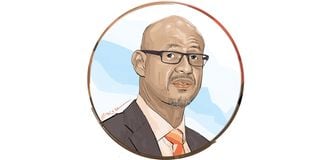
Ecobank Group Chief Executive Officer Jeremy Awori spoke to the Business Daily in the backdrop of the Lome-based lender posting a 23 percent growth in profit before tax through six months to June. He speaks of his experience running a bank across 35 African markets and the lessons learnt this far.
What has been your experience running a lender in 35 markets, which is quite different from your former role?
It’s interesting and exciting for a number of reasons. One, we are the largest bank by number of countries, which gives us the biggest pan-African perspective because other banks are either more Nigerian oriented, North African, South African, or East African.
We are in all those markets. What is beautiful about the role is that we get to see what is happening on the African continent and get a sense of being able to play a role in helping economic integration across the region, that of course also comes with its own complexities but I see a point of contribution that is different from when you run a single market.
I take that responsibility seriously because of the influence we can have within the banking or economic sphere. I value staying connected to East Africa and Kenya—my home and a key market for us—and feel deeply privileged to do so.
What’s your reflection on outcomes and financial results for the group through the first six months of 2025?
When I came in, we developed the strategy for the five-year period, which is growth transformation and returns. We have gone about executing that strategy diligently, looking at our business model, where we want to compete in each country and each region and how we want to compete.
We have also had a turnaround strategy for our sub-scale market, which are typically the newer markets. We are now starting to see the results of our investments in technology, infrastructure, and products and solutions for customers.
How are you getting on with meeting the targets set by the board on raising shareholder value and cutting costs?
Since coming in, our cost-to-income ratio has fallen from 55 percent to 49.1 percent, which is decent for two years. The return on equity was in the mid-20s; it is now up to 30.5 percent.
Our total shareholder equity for the first time in many years is increasing. Our share price has grown from about nine Naira when I came in to now, where it sits around 36 Naira.
The other important outcome has been upstreaming dividends from our subsidiaries to the holding company is re-deploying this as capital to where we see opportunities.
The Central Bank of Kenya (CBK) requires lenders in the country to have a minimum core capital of Sh10 billion and has also ended a moratorium on the licensing of new/foreign banks raising the opportunity for more consolidation, do you see mergers and acquisitions for yourself in this market?
If the right opportunity came, we would consider it. It must make strategic sense. Sometimes people think you can aggregate by buying a smaller bank.
For us, if we go through the trouble of an acquisition, it must make strategic sense, then that way it can add to the bottom line. We are open to considering acquisitions, someone running a small bank in one or just a few markets would get a lot of synergies by joining the Ecobank network.
Having operated a pan-African bank for well over two years now, what would you say is the importance of scale at a time when Kenyan banks are vying for the same status?
The one thing that makes Ecobank different is that we don’t have a one form market where most of the banks have one domicile market. For us, we are a very diversified market, which makes us truly pan-African.
Our unique perspective on the continent also allows us to partner with international firms doing business on the continent. The important thing, however, is to make the business give a decent return from all markets, which is the tough part.
It’s also difficult and expensive to expand into new markets today. Our advantage is that we know all these markets, having been there for years, which gives us that intrinsic advantage.
You are part of the pan African Payment and Settlement System (PAPSS). What would you say are the early wins and opportunities seen this far?
The payment business is massive across the continent, looking at both domestic payments and remittances, and it is important to get the system to be as efficient as possible so that customers don’t pay more to move money around.
You also don’t want to duplicate, because if we start doing that, we won’t be efficient. We are also able to do local currency to local currency payments without having to use US dollars, which is expensive on reserves. These local currency payments will help drive economic growth and uplift not just lives but also livelihoods.