For decades, Starehe Boys Centre and School has occupied a unique space in Kenya’s education landscape.
Founded on the vision of the late Geoffrey Griffin, the institution has long been described not merely as a school, but as a social experiment bringing together students from different economic backgrounds under one roof.
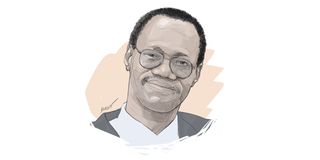
The Business Daily spoke to Director Fred Okono about Starehe Boys' future in a changing educational and regulatory environment.
Starehe has often been described as more than a school. How would you define the school philosophy today?
To use Dr Griffin’s words, Starehe is first and foremost a home. And then secondly, a character-building institution. So, what we do in the academic sphere, in the school context, is only a portion of that bigger picture. We provide a home and opportunities for character development, leadership and adventure.
What aspects of Griffin's founding vision remain unchanged? And what has evolved over time?
The fundamentals of the founder's vision have not changed, because they are perpetual. Now, if we were to look at the key elements at the foundation of Starehe, one, the fact that we do much more than a school, that has not changed. The fact that we consider character formation our primary objective remains the same.
The fact that we still admit at least 70 percent of our students, either on full or partial scholarship, has not changed.
Many alumni describe Starehe as ‘a ladder out of poverty’. How intentional is that social mobility mission in operations?
It is still fundamentally what we are about. Our mission statement says we provide care and education for boys in need and inspire them to transform into productive and exemplary members of society. So, that element of boys in need has not changed. And it is primarily an economic need.
Could you explain how the cross-subsidy model works?
The constitution of Starehe requires that we admit at least 70 percent of the boys from economically disadvantaged backgrounds. Then the other 30 percent would be boys who we can say come from normal family backgrounds.
Fee payers, as we call them, pay an economic fee. So the ones that we are admitting on partial or full scholarship will be paying from zero to a fraction of what they would normally pay in an ordinary school.
The fee-paying boys have to meet the full cost of their education in Starehe and, in quite a number of cases, pay an additional amount, which then helps us to support the sponsored boys.
So what is the economic fee?
The economic fee at Starehe at this point is Sh150,000. That is the cost of keeping a child here without drawing on charity funds. Because when we receive those charity funds, one of the things we must be very particular about is that the fee-paying element must not draw on that in any way at all.
That means the figure we set as the base for sponsorship must be the same as the base for fee-paying. Otherwise, we find ourselves drawing on charity funds to fund students who are not admitted on a charitable basis.
But the key thing is, what does that Sh150,000 cover? We provide everything for the boys. These boys that are sponsored here, we provide everything for them— food, accommodation, uniform and medical care.
We fund our extensive co-curricular programme and international trips. An ordinary school does not do that. We do not have the option to tell the child to go to their parent to buy supplementary academic materials. We do it.
Beyond fee-paying parents, what role do donors, alumni, sponsors, and government capitation play in sustaining the institution?
Starehe would not exist without the support we get from those categories of persons that you’ve mentioned. The government supports Starehe in three big ways. We receive capitation, infrastructure and teachers.
It is one of our biggest supporters, for which we are grateful. We also receive immense support from the alumni in various projects, such as the refurbishment of dormitories and the building of new facilities.
Has the global decline in philanthropic funding affected your operations? If so, how are you adapting?
It did. And very dramatically. The first big blow was about 30 years ago, in 1996, I believe, when our biggest donor at the time, the Save the Children Fund, which met close to 70 percent of our annual budget, informed us that they were changing their focus, moving away from education to humanitarian and emergency aid. So, we lost a huge supporter there.
Other organisations, over time, have done the same.
So, it has affected us. Now, the way we've tried to cope with this, thankfully, is by refining our financing. First, the Griffin Memorial Endowment Trust was set up to help us mitigate some of the funding challenges. Secondly, the growth in corporate and local Kenyan supporters. And thirdly, our alumni. These are the people who have stepped into that gap.
How do you balance institutional independence with compliance with the Education ministry regulations?
Starehe is an interesting legal animal, if I can put it that way. Behind the institution is a private charity. Starehe Boys Centre is a registered private charity. Now the charity created within itself a school, which is considered a public school. So private charity, public school.
Now, the primary reason why this was set up as a public school was a way for the government to support the work of this charity.
And that means there are things that Starehe will do that a pure public school will not do. And the government has been quite kind in giving us the latitude to do those things. So there are things we must comply with, of course, like any other public school.
What do you believe is most misunderstood aspect of the Starehe model?
I'm not sure whether it's misunderstood or more the usual Kenyan thing to assume the worst. You talk to a lot of people, and they'll tell you Starehe no longer caters for the poor.
This is a rumour, and you'll occasionally see it on social media and even occasionally in mainstream media. But more often than not, these are coming from people who are really ignorant and have not bothered to establish what the facts are. So that's a great misconception. The mission of Starehe has never changed.
What message do you have for a bright but needy student hoping to join Starehe?
Apply. We are here for you. And to apply to Starehe means three things essentially. One, in February and March, when they select their senior school, they have to select Starehe as their first choice.
Then, secondly, they have to fill out our special application form, which we call the Yellow Form. They have to make sure they fill in that and get it to us by the 31st of July.
And then thirdly, they have to excel in the entry examinations. Because on average we have only 400 places and we receive 100 times that number of applicants. So, entering Starehe is extremely competitive. Now, the bright child who fulfils those three things, we assure them they will be admitted to Starehe.