For years, the Kenya Roads Board (KRB) has largely undertaken its mandate behind the scenes, despite being at the core of the country’s vast road network.
But a recent decision to securitise Sh7 from every Sh25 collected from a litre of petrol and diesel as Roads Maintenance Levy (RML) has since catapulted the agency into the limelight as Kenyans scrutinise the impact of the decision, which came a year after the levy was hiked by Sh7.
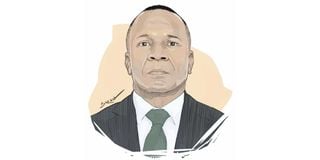
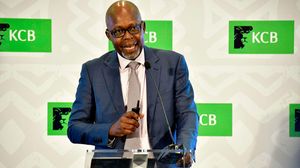
Martin Agumbi, the acting director-general of KRB, talked to the Business Daily about securitisation, deployment of RML collections and how the government intends to maintain enough collections of the levy despite rising uptake of electric vehicles.
There was public uproar and questions were raised when the government opted to securitise part of the RML collections to raise cash and pay pending bills. Why did KRB opt for securitisation?
Securitisation allowed us to access funding immediately by leveraging future fuel levy revenues, without adding to the government’s public debt. Traditional borrowing options were constrained by debt.
We ring-fenced Sh7 from the fuel levy increase and used it to secure Sh174 billion in upfront financing through the Trade and Development Bank. This amount represents the present value of those future collections over 10 years.
By settling obligations upfront, we expect most road projects to be completed by 2027, unlocking economic benefits far earlier than would have been possible under incremental payments.
The objective is not to defer problems, but to resolve them decisively and sustainably.
What became of plans to securitise an additional Sh5 from the RML?
We are alive to the reality that new certificates are falling due and so the Cabinet approved the securitisation of an additional Sh5 of the road maintenance levy. This brings the total amount securitised to Sh12, which is still less than 50 percent of the fuel levy and so we are still operating within the provisions of the law.
The Sh5 is going to raise Sh120 billion and we are using the same leader ranger (TDB) to do the transaction.
We have already requested the TDB to ensure that we receive Sh60 billion in the current financial year, before June 2026 and the balance of Sh60 billion in the 2026/27 financial year.
Based on our cash flow projections, we estimate that new certificates falling due will be in the region of Sh60 billion and this is the money that we are going to use to settle the new certificates.
How and when does KRB remit the money to the purpose vehicle that was formed for the securitisation process?
Currently, KRB receives the entire Sh25 and remit Sh7 to the Special Purpose Vehicle (SPV) that was formed for the securitisation process. We remit the money on a weekly basis. However, TDB was of the opinion that lenders would be more comfortable if Kenya Revenue Authority (collecting agency) would directly remit the Sh7 shillings to the SPV.
We explored this suggestion and based on meetings between the Ministry of Roads and Transport, Energy and Petroleum Regulatory Authority and Central Bank of Kenya, we agreed to this proposal.
So KRA will now be remitting the money directly to the SPV. We expect KRA to start this month (February).
The ministry had earlier said that it would negotiate with road contractors to try and reduce the bill owed to them, then pay them the remainder and allow resumption of works. How did this turn out?
The government negotiated with the contractors and most of them agreed to waive interest on their bills.
Part of the conditions for signing the settlement agreement was that you needed to waive 70 percent of the interest that you had charged the government. This waiver resulted in a saving of Sh7.5 billion, which is significant.
We had 580 delayed projects and of all these, only 10 percent of the contractors did not sign this return to work agreement, a majority of them are Chinese. We are still negotiating with them.
Any contractor whose bill was Sh50 million or less was fully paid and this significantly eased the pain on our contractors. For those who were paid the 40 percent, they received another 40 percent in 120 days and the balance was 20 percent two months later.
Pending bills, not only for the roads sector, have been a nightmare to contractors. How does the government intend to cure this problem?
The ministry has instituted policies to ensure that we do not procure roadworks that are not already fully funded. That way we will not incur pending bills going forward.
Procuring works despite lack of a budget has been the biggest contributor to the growth of the pending bills and this really hurts contractors.
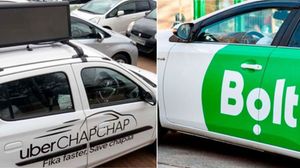
Given the rising uptake of electric vehicles, what plans are there to ensure that they contribute to the kitty used to maintain and build roads given that they do not use diesel or petrol?
We are considering ways of ensuring that the RML collections do not fall in the coming years as a result of the increased use of electric vehicles.
Kenya Roads Board commissioned a study on the impact of e-mobility on the future sustainance of the road maintenance levy and we have set up the e-mobility policy where we are attempting to find alternative sources of funding for road maintenance, away from the scope of the traditional fuel levy.
We have proposed to charge a levy on electric vehicles based on distance covered and this will require that each motorist instals a gadget on the vehicle.
Remember that we import nearly 85 percent of our used vehicles from Japan. But Japan is going green and has decided that from 2032, they will stop production of internal combustion engines. This means that second-hand cars from this market will be electric and thus we must find an innovative way to raise money from these cars to maintain our roads.
What are the other alternatives on the table, apart from the levy on electric vehicles?
We are thinking of imposing a levy, an insurance levy such that every year when you go to pay your insurance then one percent of what you pay will go to the government to cater for the damage, wear and tear.
There is also the proposal to reintroduce the road license where every year If you have a registered vehicle, you pay this. But all these are just proposals that we are looking at to mitigate the impact of e-mobility on fuel levy collections.