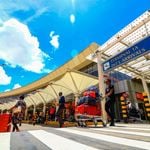
Airlines have begun auditing the financial impact of flight disruptions at the Jomo Kenyatta International Airport (JKIA) due to a workers’ strike that was called off on Tuesday.
The industrial action, called by the Kenya Aviation Workers Union(KAWU), began on Monday and disrupted operations of several carriers, leading to aircraft groundings, flight cancellations, and passenger refunds.
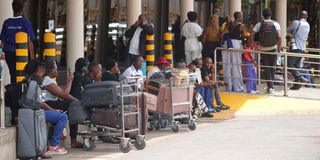
Airlines warn of financial hits as they absorb losses linked to fuel burn, compensation claims, and the lost flying hours.
Jambojet CEO, Karanja Ndegwa, told Business Daily that the airline operated only a fraction of its scheduled flights over the two days of the workers’ strike.
“Between Monday and Tuesday, we operated only 23 return flights out of the scheduled 64 return flights. This affected about 5,000 passengers,” he said.
He added that the operational slowdown translated into direct financial losses.
“Over the two days, we have suffered financial losses due to flight cancellations, processing refunds, and other operational arrangements.” Mr Ndegwa said.
Domestic carrier Safarilink said the disruptions had a severe impact on its daily operations due to the prolonged delays on the ground.
Safarilink CEO, Alex Avedi, said departures were delayed by several hours, which increased their operating costs.
“We are seeing departures being delayed, some even up to six hours. We are running engines for up to one and a half hours on the tarmac before we are given clearance to depart, and that is costing us a fortune in fuel and maintenance,” he told Business Daily.
The delays have also reduced aircraft utilisation, limiting the number of flights that can be operated in a day.
“We could normally do six flights in a day; now you can only do three. The aircraft is tied up, so you can’t use it for other services,” Mr Avedi said.
Safarilink is offering passengers full refunds or free rescheduling, describing the disruption as beyond its control.
National carrier Kenya Airways (KQ) confirmed that the brief strike caused operational disruptions but did not affect its fleet utilisation or international airport access.
KQ Director of Flight Operations Paul Njoroge said the airline activated its internal Disruption Management Committee (DMC) to manage the costs arising from the delays, noting that the expenses varied depending on operational circumstances.
Additionally, he said the airline did not incur additional parking or apron fees at foreign airports due to the delays, nor did the disruptions threaten the airline’s slot allocations at major international destinations.
“Slot utilisation is based on our annual arrivals and departures at the airport, so a day or two has no impact,” Mr Njoroge said.
The Transport Ministry brokered the agreement for KAWU to end its industrial action.