The UN has committed up to $790,000 (Sh101.8 million) to two firms to cut sewage pollution and reduce destructive fishing, signalling a shift toward financing environmental protection through commercial businesses.
The funding to the Kenyan firms was approved by the United Nations Capital Development Fund (UNCDF) through the Global Fund for Coral Reefs (GFCR), and targets wastewater treatment and fisheries along Kenya’s coral reef-dependent coastline.
UNCDF said the financing supports Sanivation and Kumbatia Seafood, two locally operating companies whose activities directly affect reef health, fisheries productivity, and incomes in coastal communities.
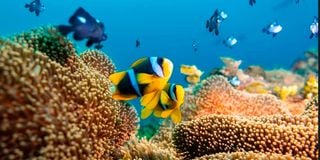
The move reflects growing concern that untreated sewage and reef-based fishing are accelerating the degradation of coral ecosystems that underpin tourism and fishing across Kenya’s coastal counties.
“With these investments, the GFCR aims to demonstrate that targeted, patient capital can help local enterprises grow while having a positive impact on lowering stressors on the most resilient Kenya’s coral reef,” said Pierre Bardoux, Director of GFCR in UNCDF Strategic Fund Unit.
“Within GFCR’s investment ecosystem, UNCDF plays a catalytic role by deploying concessional capital and risk-absorbing instruments in higher-risk markets, helping crowd in wider public and private finance to generate sustained impact across livelihoods, local markets, and ecosystems,” the official said.
Sanivation received $540,000 (Sh69.6 million) to expand its waste-to-energy operations, which collect and treat human waste that would otherwise be discharged into rivers and marine ecosystems.
The company will extend its operations to the Malindi National Marine Park area, processing sewage and converting it into clean-burning fuel briquettes for industrial use.
UNCDF said the expansion is expected to reduce nutrient and pathogen loads entering coastal waters, while supporting employment in waste collection, processing, and energy production.
A second facility of up to $250,000 (Sh32.2 million) was approved for Kumbatia Seafood to expand its sustainable fisheries model beyond Lamu into Kwale County.
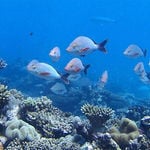
Kumbatia works with artisanal fishers to shift fishing activity away from inshore coral reefs toward offshore pelagic species using selective and reef-safe fishing gear.
The approach is intended to reduce pressure on reef ecosystems while maintaining catches by targeting select species that are found away from coral habitats.
UNCDF said the funding will strengthen fisher training, cold-chain infrastructure, quality control systems, and traceability to support access to higher-value seafood markets.
Part of the financing will also support vessel monitoring technology to improve transparency and responsible sourcing within small-scale fisheries supply chains.
The Kumbatia investment includes performance-based conditions, linking continued access to capital with measurable environmental outcomes and income stability for participating fishing communities.
Both investments fall under the Miamba Yetu programme for the Kenya–Tanzania seascape, which supports blue economy activities tied to conservation and climate resilience.
UNCDF said it uses concessional and risk-absorbing capital to attract private investment into coastal sectors that are environmentally critical but often avoided by commercial lenders.
The Global Fund for Coral Reefs is backed by UN agencies, governments, and investors, and aims to mobilise finance for businesses that reduce pressure on coral reefs.