Court halts KPC sale plan on legal breach, transparency concerns

kpc

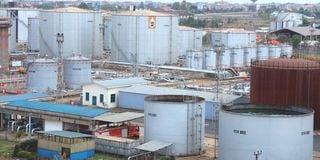
Kenya Pipeline Company (KPC) petroleum storage facility in the Industrial area, Nairobi. 

Photo credit: File | Nation Media Group

The High Court has halted the government's plan to sell a portion of its stake in the Kenya Pipeline Company (KPC), pending the determination of an application filed by the Consumer Federation of Kenya (Cofek) which is opposed to the looming transaction.

The court issued the conservatory order following transparency queries raised by Cofek and allegations of statutory breach.
"The process violates express provisions of the Privatisation Act, 2023, which require transparency, public participation, and parliamentary oversight before any disposal of public assets. Failure to involve the public in the privatisation process undermines the sovereignty of the people as enshrined in Article 1 of the Constitution," claimed Cofek in the application.

The court order issued by Justice Bahati Mwamuye blocks the government from offering for sale, allocating, disposing of, transferring, or otherwise dealing with any shares of the KPC in relation to the contested privatisation plan.

Effectively, the order has delayed plans by the National Treasury to address budget shortfalls in the 2025/26 fiscal year. The National Treasury previously argued that it intended to raise approximately Sh100 billion from the sale of 65 per cent of the KPC shares through an initial public offering at the Nairobi Securities Exchange.

The proposed sale was part of a fundraiser plan by the Treasury to fund its 2025/26 budget.

The court order is directed to the Cabinet Secretary for National Treasury & Planning, Privatisation Authority, Attorney General, and the National Assembly, who are named as respondents in the suit. It is also directed to the KPC, Capital Markets Authority, and Nairobi Securities Exchange (NSE), who are named as the interested parties.

Asking the court to halt the planned sale, Cofek cautioned that if the process proceeds on the face of the alleged breaches, it would result in irreversible loss of public control over a critical national asset, which operates strategic petroleum transport and storage infrastructure central to Kenya’s economic stability and energy security.

 "There has been no genuine public participation in the manner contemplated by Articles 10 and 232 of the Constitution, as there has been no disclosure of the terms, valuations, strategic assessments, or long-term impact of the proposed transaction," said Cofek's lawyer, Tali Israel Tali.

It was also argued that the transaction threatens national security and consumer welfare, "as KPC is designated critical infrastructure under the Energy Act, 2019".

"Its privatisation without safeguards may expose the petroleum supply chain to risks of manipulation, sabotage, or monopolistic exploitation," Cofek claimed.

The lobby group's Secretary-General, Stephen Mutoro, said that the government breached Section 5 of the Privatization Act, which provides for the guiding principle in the privatisation of national assets.

The principles include the promotion of participation by Kenyans in the sustainable development and protection of the economy, transparency and accountability, efficiency and sustainability, and cost-effectiveness and value for public resources.

"The Privatisation Act 2023 requires that before a strategic State Corporation, such as the Kenya Pipeline Company, is privatised, there must be a comprehensive cost-benefit analysis, an independent valuation, a feasibility study, and public consultations with full disclosure of relevant information," says Mr Mutoro in the court papers.

He adds: "The Energy Act 2019, read with Article 238 of the Constitution and the National Security Council Act 2012, requires that a national security impact assessment be undertaken in respect of petroleum infrastructure classified as critical national infrastructure".

Since KPC’s infrastructure directly underpins petroleum supply and pricing in the country, Cofek argues that the privatisation of KPC may have an impact on fuel consumers.

"Privatising a controlling stake without price stability safeguards or a demonstrated plan to protect supply reliability threatens to impair consumers’ rights to goods and services of reasonable quality and to information necessary for their benefit," Cofek says.

The petition alleges that the National Assembly has failed in its constitutional role to exercise oversight over the Executive and to approve any proposed privatisation plans.

The lobby group wants the government to be compelled to disclose and deposit in court certified copies of all reports, valuations, memoranda, approvals, minutes, and correspondence relating to the proposed privatisation of the Kenya Pipeline Company Limited.

Also sought is the public disclosure of cost-benefit and fiscal impact analysis, options appraisal papers, national security impact assessment, governance reform plan, and all resolutions authorising the transaction.

Additionally, the petitioners have applied for an order that any capital markets transaction involving KPC be limited to a non-controlling minority listing after the public sought disclosures and after an independent valuation verified by CMA-approved experts.

Justice Bahati Mwamuye directed the CS National Treasury, together with the other respondents and interested parties, to file their responses to the case by August 22, 2025, and fixed the hearing date on September 5, 2025.

PAYE Tax Calculator

Note: The results are not exact but very close to the actual.