Time flies with great content! Renew in to keep enjoying all our premium content.
Prime
Del Monte’s deals with sister firms trigger Sh6.76bn tax war
In the Finance Act 2025, the government introduced Advance Pricing Agreement (APA) framework, allowing companies and the KRA to agree in advance on transfer pricing methods for complex related-party transactions.
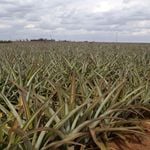
Pineapple grower Del Monte Kenya is staring at a Sh6.76 billion bill after a tax tribunal ruled that the company understated its local income by shifting profits offshore to related entities.
The Tax Appeals Tribunal found that the Thika-based fruit processor sold fresh and processed pineapples to a sister company abroad at prices that did not reflect the value created in Kenya and claimed interest deductions from a loan deal that favoured its parent firm.

The Kenya Revenue Authority (KRA) said deals shrank the income for Del Monte Kenya, resulting in reduced income tax collection.
In its rulings, the tribunal examined Del Monte Kenya’s dealings with related overseas entities, including Switzerland-based Del Monte International GmbH, which buys fresh and processed pineapples from Kenya for sale in Europe, and Del Monte Fund BV—the financial arm providing loans.
The tribunal agreed with the KRA that Del Monte International GmbH squeezed the revenues of the Kenya unit after the Swiss firm billed the Thika-based firm for quality control, logistics and sales and marketing, which were done by the Kenyan unit.
The tribunal also backed the taxman’s argument that the loan agreement between Delmonte Kenya and Del Monte Fund BV depressed profits of the Thika-based firm because it was costlier. The tax demand stems from two audits the KRA conducted on the multinational starting in Mid-2024 as the country clamps down on aggressive tax planning by global firms.
The first assessment, dated September 20, 2024, imposed a Sh1.76 billion liability for 2018.
The second, issued on March 17, 2025, demanded Sh4.959 billion for the 2019–2021 period, inclusive of principal tax, penalties, and interest.
In a ruling delivered on January 16, 2026, a five-member Tax Appeals Tribunal chaired by Christine Muga dismissed Del Monte’s appeal and upheld the two audit assessments, finding that most of the key functions were carried out by the Kenyan unit rather than Del Monte International GmbH.
As a result, the tribunal ruled that the bulk of the profits should have been taxed in Kenya.
The KRA had also disallowed interest expenses on a loan advanced by Del Monte Fund BV, noting that the entity was not an independent financier.
“The upshot of the foregoing is that the tribunal finds and holds that the appeal fails and it proceeds to make the following orders… the appeal be and is hereby dismissed,” the tribunal said.
Del Monte International GmbH serves as the group’s international trading and distribution hub, coordinating global sales and marketing for Fresh Del Monte Produce, while the Dutch-registered Del Monte Fund BV functions as the group’s financial arm, handling intercompany funding.
At the apex of this global corporate network is Fresh Del Monte Produce Inc., the parent company that is incorporated in the Cayman Islands, a jurisdiction widely regarded as a tax haven.
In its argument, Del Monte Kenya told the tribunal that its Functions Performed, Assets Employed, and Risks Assumed (FAR analysis)—a method for examining how value is created within a global corporate group—showed that DMI GmbH actually carried out most of the high-value functions, such as quality control, logistics, and sales, which reduced the revenue of the Kenyan entity.
The tax authority rejected the FAR analysis due to insufficient evidence that the functions were genuinely performed by the Swiss subsidiary.
It also disallowed interest expenses on an intercompany loan that the Kenyan unit received from DMF BV, arguing the transaction lacked commercial substance and was not conducted on arm’s length terms.
The KRA insisted that DMF BV was wholly owned by DMI GmbH, which had not paid Del Monte Kenya more money for the supplies of pineapple and fruit juice than the loan it gave to the Kenyan subsidiary.
“This raised a concern on the rationality of the commercial arrangement,” said the tribunal.
The tribunal found that Del Monte Kenya suppressed profits by charging only a 4.83 percent mark-up on sales to its Swiss counterpart, Del Monte International GmbH. It noted that the Kenyan subsidiary handled nearly all operations, from farming pineapples and processing juice to managing essential functions like quality control, logistics, sales, and customer relations, siding with the KRA’s assessment.
The decisions come amid a government drive to rein in tax avoidance by multinationals, particularly profit shifting through transfer pricing structures that move income to lower-tax jurisdictions despite the underlying economic activity taking place in Kenya. Transfer pricing is about how much companies charge each other when they are part of the same group.
Multinational companies operate in many countries but want to pay the least tax possible overall. Because they trade with themselves across borders, they can influence where profits appear by adjusting internal prices.
The KRA requires companies to develop transfer pricing policies that price related-party transactions as they would between independent firms, a principle known as arm’s length, and one intended to prevent profits from being shifted out of Kenya to low-tax jurisdictions.
The rulings form part of a broader push by the government to curb tax avoidance by multinational firms, particularly schemes that involve shifting profits out of Kenya through manipulated transfer pricing arrangements, where income is booked in lower-tax jurisdictions despite value being created locally.
The measures are aimed at preventing multinationals from understating profits earned in Kenya by selling goods cheaply to offshore affiliates or loading local entities with inflated costs. By tightening rules around intra-group sales, services and financing, the government is seeking to ensure profits are taxed where real economic activity takes place.
In the Finance Act 2025, the government introduced Advance Pricing Agreement (APA) framework, allowing companies and the KRA to agree in advance on transfer pricing methods for complex related-party transactions.
Kenya has also expanded country-by-country reporting requirements, giving tax authorities visibility into where multinational groups generate profits and pay taxes globally.
In addition, proposals such as the minimum top-up tax—aligned with global anti-BEPS standards—are designed to discourage shifting income to low-tax jurisdictions. Collectively, these measures signal Kenya’s intent to align with international best practice and close loopholes used to erode the domestic tax base.