A unit of US tech giant Facebook will finance and take a stake in Safaricom’s undersea fibre optic cable running from Oman to Mombasa in the race for more bandwidth, high-speed internet and less reliance on third parties.
Edge Network Services Ltd, an Ireland-based affiliate of Facebook owner Meta, is listed as a project financier for the 4,108-kilometre subsea fibre optic cable, according to regulatory filings from the National Environment Management Authority (Nema)—the environmental watchdog.

Meta, which owns Facebook, Instagram and WhatsApp, has sought to extend its presence in technology beyond social media, including in artificial intelligence (AI) and the infrastructure that supports it.
The disclosures show the Kenyan component of the project will cost $23 million (Sh2.98 billion), with the Facebook unit taking an undisclosed stake.
The Communications Authority of Kenya (CA) earlier disclosed that Safaricom had made an application for submarine cable landing rights.
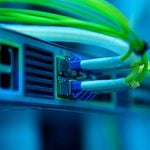
Undersea cables, also known as submarine communications cables, are fibre-optic cables laid on the ocean floor and used to transmit data between continents.
These cables are the backbone of the global internet, carrying the bulk of international communications, including email, webpages and video calls.
One regularly cited statistic suggests more than 95 percent of the world's internet traffic is transferred through undersea cables. Safaricom is seeking more bandwidth as it expands in the fast-growing data segment in the face of slower growth from the voice business.
But the telecoms operator is facing rivalry, notably from satellite internet providers such as Elon Musk’s Starlink that has rolled out increasingly competitive pricing options and plans that allow Kenyans to rent the required hardware.
Safaricom is listed as the project proponent in the Facebook submarine partnership, dubbed the Daraja Fibre Optic Cable.
“The Daraja Project is expected to go live in 2026, delivering much-needed internet capacity and enhanced reliability between Oman and Kenya, supplementing the fast-growing demand in both countries,” says the environmental impact assessment (EIA) report filed with Nema.
“The project will underpin the further growth of 4G, 5G, and fixed broadband access for hundreds of thousands of people.”
It will use 24 fibre pairs — compared to the typical eight to 16 — giving it a higher capacity.
This is part of Meta’s plans to build a 50,000km (31,000 mile) subsea cable across the world.
The tech giant said Project Waterworth - connecting the US, India, South Africa, Brazil and other regions - will be the world's longest underwater cable project when completed.
It said its new cable project would provide "industry-leading connectivity" to five major continents and help support its AI projects. Tech firms that serve as major providers of web services have invested huge sums in cable infrastructure.
Google said in 2024 it would build the first subsea cable connecting Africa and Australia, and announced a $1bn investment to boost connectivity to Japan with two new subsea cables in the Pacific Ocean.
Edge Network Services is also setting up a Managed Optical Fibre Network in India at a cost of $200 million (Sh25.8 billion), expected to be completed within two years.
Google, which has invested in more than 30 submarine cables, announced last year that it was building the Umoja Subsea Cable—the first ever fibre optic route to directly connect Africa with Australia. This will link Australia to South Africa via a subsea cable and onwards to Kenya through a terrestrial cable.
Analysts reckon that Safaricom is racing to diversify its sources of high-speed internet and cut reliance on Telkom Kenya in its quest for more bandwidth. Currently, Safaricom relies on third parties for connections to the undersea cables.
This includes privately owned SEACOM and Telkom Kenya, which operate and maintain five of the six submarine cables that have landed in the country.
Telkom operates and maintains five of the six submarine cables already landed in Kenya, including the East African Marine System (TEAMS), EASSy, Lion2, DARE 1, and PEACE.
Safaricom holds a 32 percent stake in TEAMS, alongside Telkom (23 percent) and the Kenyan government (20 percent). However, its agreements with SEACOM are set to expire in June 2028, pushing Safaricom to invest in its own infrastructure.
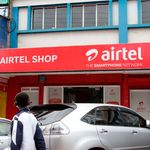
Safaricom’s competitor, Airtel Kenya, is also preparing to activate a new submarine internet cable, signalling a fresh wave of connections in the region.
The country’s broadband market holds huge potential amid a push by the State to digitise its services and expand ICT services to rural areas.
Starlink is riding on the back of the world's richest person, with a net worth of $237 billion (Sh30.6 trillion), and is betting on lowering internet costs in a segment dominated by Safaricom, Jamii Telecommunications Limited (JTL) and Zuku.
It has unsettled local telecom players, including Safaricom, Airtel Kenya and Jamii Telecom that fired protest letters to the CA, even as the antitrust authority—Competition Authority of Kenya (CAK)—got dragged in court over Starlink’s operation.
The number of Kenyans using satellite internet has increased since Starlink entered the Kenyan market in July 2023.
Starlink currently operates in over 100 countries globally, including 14 in Africa. In many of these markets, their products are still at the test stage.
The firm has disrupted the internet service market in different African countries, including Kenya, where it controls a 0.9 percent stake of fixed internet subscriptions as of the end of March.
Safaricom maintained the lead with a market share of 36.5 percent, followed by JTL (22.3 percent) and Wananchi Group (14.4 percent). Safaricom is ramping up its data business to offset sluggish performance in mobile calls, where it has seen muted growth due to saturation. Data is one of Safaricom’s fastest-growing revenue lines.