Chinese-owned electric vehicle (EV) dealer Rideence Africa is investing Sh320 million in an assembly line in Mombasa as it seeks to reduce vehicle prices by as much as 25 percent through tax incentives offered to firms engaged in local production.
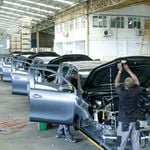
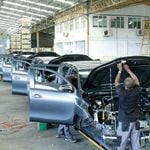
The firm has partnered with Associated Vehicle Assemblers (AVA) to assemble electric hatchbacks from completely knocked-down (CKD) kits sourced from the Chinese automaker Beijing Henrey and 16-seater vans by the commercial vehicle company Jiangsu Joylong.
The investment covers the cost of importing assembly kits, plant fees payable to AVA, taxes, freight, and expanding labour capacity to raise production output. Some 132 hatchbacks and 20 vans are scheduled to be assembled by the end of February.
Rideence leases Beijing Henrey's tiny Xiaohu FEV model cars to taxi drivers in Nairobi, who pay a deposit of between Sh50,000 and Sh100,000 and a daily lease fee of between Sh2,400 and Sh3,100 for six days a week.
The cars have a driving range of between 200 and 285 kilometres. Customers also currently buy the cars outright at Sh2.5 million and Sh2.8 million for the two varieties, respectively. The company says it has deployed more than 180 EVs since entering the Kenyan market in November 2023.
EV assemblers in Kenya are exempt from the 35 percent import duty levied on fully-built units shipped into the country.
The government has also lowered excise duty on EVs from 20 percent to 10 percent and exempted them from value-added tax to boost their uptake in the new-vehicle market.
These tax benefits are expected to help Rideence to lower the prices of its vehicles in the Kenyan market.
"We will be assembling between five and 10 vehicles a day at the Mombasa facility," a company spokesperson told the Business Daily. "We have been paying a lot of taxes while importing fully built units. With a local plant, we will benefit from incentives while also sourcing components such as tyres, upholstery and leaf springs from local manufacturers."
For the Joylong vans, which now retail at about Sh7 million, excluding VAT, Rideence expects prices to drop by as much as 25 percent, but said final pricing would be announced after costs are fully factored in.
Beyond EVs, the government also exempts assemblers of all vehicles from the import duty of 35 percent levied on fully built vehicles.
Assemblers also pay a lower import declaration fee of 2.5 percent for their completely knocked down parts headed to assembly plants, compared to the standard 3.5 percent. The two percent Railway Development Levy is also reduced to 1.5 percent for assemblers.
Rideence has invested more than Sh1.4 billion in Kenya since 2023, according to Managing Director Minnan Yu. The firm expects the partnership with AVA to lift local content to more than 25 percent by 2026, with a longer-term target of between 40 and 60 percent.
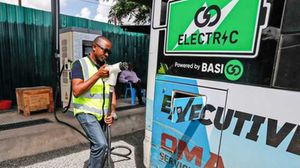
The firm currently operates more than 16 charging stations in Kisii, Narok, Nakuru, Machakos, Nairobi, Kiambu and Kajiado.
“It is good that there is already an established supply chain for van components, because electric models share a lot of parts with their ICE (internal combustion engine) counterparts,” the spokesperson added.
It plans to increase the number to 100 nationwide by the end of 2026 to support its growing fleet. Most additional stations are expected to cater to electric vans.
AVA, owned by Simba Corp, is one of the top assemblers in the country and produces vehicles for several rival dealers.
Much of the assembly in Kenya has, however, been concentrated in commercial units such as pick-ups, trucks and buses.
Meanwhile, a large percentage of Kenya’s EV production has been in two-wheelers and buses. Rideence joins fellow Chinese EV carmaker Dongfeng, which in December 2025 announced a deal with AVA towards local assembly in the first quarter of 2026. In November 2025, Tad Motors, owned by the Ethiopian-born Dutch businessman Tadesse Tessema, launched sales for its first five locally assembled electric cars made from Chinese-sourced parts.