How trader lost SportPesa Global ownership suit in London

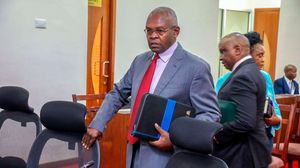
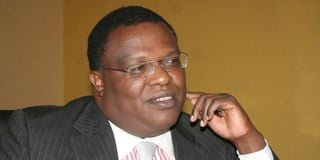
Kenyan businessman Paul Wanderi Ndung'u.

Photo credit: File | Nation Media Group

Kenyan businessman Paul Wanderi Ndung'u has lost a legal bid to reinstate his 17 percent stake in SportPesa Global Holdings Limited (SGHL) after a London court dismissed his claims of unfair prejudice or harm to minority shareholders.

Mr Ndung'u had sued SGHL, which is affiliated to the Kenyan unit of Sportpesa, and some of his co-directors after his shareholding was diluted to 0.85 percent between 2019 and 2022 in the wake of three rights issue totaling £1.9 million (Sh325.5 million).
The trader, who is also fighting for control of SportPesa brand in Kenyan courts, claims that his fellow directors hatched a scheme through forgery and equity fund raising to dilute his ownership.

He sought restoration of his original 17 percent stake, rectification of SGHL’s share register, damages for financial losses and wrongful dismissal as a director as well as legal costs for the mega suit.

However, the London court ruled against offering the Kenyan businessman remedies, citing lack of evidence that SGHL directors and majority shareholders run the firm in a manner that was harming the interest of minority shareholders or Mr Ndung’u. It also ruled claims of forgery and falsification of board communications lacked evidence.

It also ruled out cases of forgery and falsification of board communications.

"More specifically, the claimant has failed to establish that there has been any conduct of the affairs of the company which has caused him to suffer prejudice, in his capacity as a member of the company. The failure of the claimant to establish unfairly prejudicial conduct means that the question of remedies does not arise," said the judge.

Under the UK law (Companies Act) unfair prejudice occurs when affairs of the firm are run in a manner that harms the interest of minority shareholders leading to share dilution, exclusion or breakdowns of trust.

The legal spat was triggered by the three rights issue that started on October 17, 2019 after Sportpesa trading under Pevans stopped operations in Kenya in September 2019 due to a drastic hike in taxes on betting stakes.

Its closure, which also saw rival Betin Kenya end Kenya operations, triggered a financial crunch in SGHL, prompting the three cash calls £500,000, £500,000 and £900,000.

SGHL directors Ivaylo Bozoukov and Kalina Karadzhova authorized three capital injections (£500,000 in October 2019, £500,000 in December 2019, and £900,000 in December 2021) to keep the company solvent.

Kenya shareholders, Mr Ndung’u and Asenath Wacera, did not participate in the issue, leading to dilution of their stakes.

Mr Ndung’u’s stake dropped to 1.5 percent from 17 percent after failing to take up the first and second offers.

Meanwhile, the stakes of Bulgarian investor Guerassim Nikolov rose from 21 percent to 46 percent while that of US shareholder, Gene Grand, increased to 29.88 percent to 21 percent, court records show.

This forced Mr Ndungu to file a petition at the London court seeking restoration of his 17 percent stake.

He argued that the SGBL board minutes showing approval of the first rights issue of £500,000 were falsified. Mr Ndung’u said that he was not informed of October and November 2019 board meetings and that the notice of the first rights issue offer arrived after its expiry, locking him out of the fundraiser.

In the first issue, Mr Ndung'u did not participate because he was not properly notified.

The offer was sent via DHL and to an address which had not been specified by the businessman for the purpose of receiving communications from the company, causing him to miss the deadline.

He received the letter past the deadline date for acceptance and as result his shares reduced from 17 percent to 2.83 percent.

In the subsequent second and third capital raises, he was also willing to participate but there was a tussle on whether allocation of his pre-emption rights was to be based on the proportion of 2.83 per cent or the 17 percent shareholder in the company.

Mr Ndung'u had insisted that the allocation should be based on 17 percent and asked the directors to amend the offer letter.

He also sent the company the form of acceptance letter, dated January 3, 2022 stating he agreed to pay £323,000 to cover all the three right issues (£85,000 for the first Capital Raise, £85,000 for second and £153,000 for the third). He pegged these figures on the belief that his stake was 17 percent.

However, the company and two of his co-directors maintained that he could only subscribe for the amount of shares specified - the reduced shares.

In his court case Mr Ndung’u accused Bozoukov and Karadzhova of conspiring to sideline Kenyan shareholders, alleging exclusion from key meetings and withholding critical financial information.

He also alleged falsification of meeting minutes to justify share dilution. He told the court that his shareholder rights had been ignored and that he had been deliberately pushed out of the company.

Mr Ndung'u alleged the capital raises were engineered to sideline him and weaken the influence of Kenyan shareholders at the company.

But the London court dismissed his petition, while admitting that SGHL breached section 561 and 562 of the UK company law in shepherding rights issues.

Section 561 demands that firms must offer new equity shares to existing shareholders first, proportionally to their existing holdings, before offering them to others, to prevent dilution of their stake.

Section 562 governs the communication of pre-emption offers, requiring them to be sent in hard copy or electronic form, stating a minimum 14-day acceptance period that cannot be shortened, and detailing start dates for these periods.

The court found that the SGHL failed to follow the strict rules governing new share allotments.

However, he reckoned that the breaches were not intentional and that the company did not anticipate that the meeting notices sent to Mr Ndung’u’s email and physical addresses would not reach him.

The judge also found the company and Bozoukov did not deliberately send the offer letter for the first rights issue to a wrong address.

“The breaches of sections 561 and 562 (the first breach), which occurred in relation to the first offer letter, were inadvertent. There was no deliberate conduct and no scheme to dilute the claimant’s shareholding in the company,” said the judge.

“There was no illegality in relation to the third capital raise and no scheme to dilute the claimant’s shareholding in the company. I find that the alleged scheme never existed,” he added, while giving a similar verdict on the second rights issue.

In regard to fraud or conspiracy allegations, the court found no evidence directors Ivaylo Bozoukov and Kalina Karadzhova intentionally diluted Mr Ndung’u’s stake.

It ruled there was no credible evidence that meeting minutes had been falsified to justify share issuances.

"If the forgery allegations had been established, they would have provided support for the case that the second and third defendants (Ivaylo Petev Bozouko and Kalina Lyubomirova Karadzhova), assisted by Mr Robert Macharia, were working in concert to dilute the claimant’s shareholding in the company," said the judge.

The court also dismissed the unfair prejudice claim under Section 994 of the Companies Act.

The judge said there was no evidence that SGHL acted in a way that unfairly harmed him as a shareholder.

Mr Ndung’u had not been actively involved in the company’s management before the dispute and had raised no objection to this before the first capital raise.

“I have difficulty in seeing how this lack of involvement, which does not appear to have generated any protest from the claimant (Mr Ndung’u ) until his discovery of the implementation of the first capital raise, can be said to have constituted unfairly prejudicial conduct,” the judge observed, dismissing his argument that he had been excluded unfairly.

The judge reckoned that the factions started to fight before the rights issue fall out at Kenya’s Pevans East Africa, which owned the SportPesa brand before its transfer to SGHL.

"The lack of trust which existed between the two groups, at least by 2019, is manifest in the evidence," said the court.
Ownership structure of Pevans and SGHL was nearly similar.

Trouble at Pevans became public in October 2022, when a general meeting was held in Dar es Salaam, which was convened under a special resolution to expel Mr Ndung’u and Ms Wacera.

The directors of the betting firm then sought from the court, orders stopping Mr Ndung’u and Ms Maina from filing any case on behalf of the company, saying they have no authority having been expelled.

The SportPesa brand returned on October 30, 2020, through Milestone Games. The brand got its first approval from the BCLB, triggering the court fight for the key assets of the gaming firm, including the trademark and web domains.

Online sports betting companies such as SportPesa had grown rapidly in Kenya in the years to 2019, riding a wave of enthusiasm for sports, with the government saying the gaming industry achieved a combined revenue of over Sh250 billion in 2018.

That sparked government concern about the social impact of betting, prompting tax hikes and introduction of new gambling regulations, including restriction on advertising outdoors and on social media.

Founders of Pevans East Africa earned dividends totaling Sh7.6 billion in the four and a half years to June 2019.

The payouts, disclosed in Pevans’ audited financial statements and management accounts earlier seen by Business Daily, created new billionaires and expanded the fortunes of others who were already wealthy.

Among those who scored big are foreign and local entrepreneurs including Ms Wacera, Nikolov, Paul Ndungu, and Ronald Karauri.

Mrs Maina and Nikolov earned gross cumulative dividends of Sh1.6 billion each, based on their stakes of 21 percent each in the company.

Ms Wachera and Nikolov earned gross cumulative dividends of Sh1.6 billion each, based on their stakes of 21 percent each in the company.

The documents show that Pevans started paying dividends in 2015 when it made a distribution totaling Sh1.57 billion. The shareholders had a banner year in 2016 when the firm paid a record dividend of Sh4.3 billion.

The payout fell drastically to Sh290.3 million in 2017 and rose to Sh876.5 million the next year.

Pevans paid a dividend of Sh559.9 million in the half year ended June 2019 and ceased operations soon thereafter when the government clamped down its operations over alleged non-payment of taxes.

PAYE Tax Calculator

Note: The results are not exact but very close to the actual.