KPC eyes higher charges on fuel storage and transport ahead of shares offering

kpc

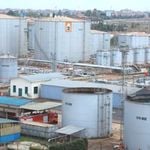
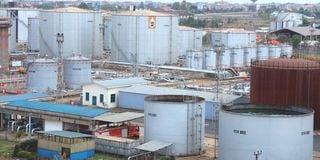
Kenya Pipeline Company (KPC) petroleum storage facility in the Industrial area, Nairobi. 

Photo credit: File | Nation Media Group

Kenya Pipeline Company (KPC) is seeking to raise the cost of storing, handling and transporting fuel through its infrastructure in a bid to boost revenues ahead of its Initial Public Offering (IPO) in March next year.

The State-owned firm submitted a new tariff where the cost of storing and handling every 1,000 litres of fuel will rise 7.4 percent to Sh1,065.61 in the year to June 2026, from the current Sh992.46 for similar quantity. It will then jump to Sh1,068.94 from July next year.
KPC’s proposal to increase the tariffs is aimed at raising an additional Sh2.79 billion in revenues to fund a number of projects even as the firm looks set to list on the Nairobi Stock Exchange (NSE). The company's sales stood at Sh28.9 billion in the year ended June 2025.

The government is set to sell up to 65 percent of its stake in KPC by March 2026, in a bid to raise an estimated Sh100 billion and help plug the widening budget deficit.

“The derived composite tariff is a marginal increase of 2.4 percent above the current tariff of Sh5.44 per cubic metre per kilometre,” KPC says in tariff application to the Energy and Petroleum Regulatory Authority (Epra).

The tariffs which will be in force for a three-year cycle to June 2028, must get approval from Epra in order to become effective. A composite tariff refers to a single charge that combines multiple fees such as storage, handling and pipeline transportation, into one fee per a defined unit of fuel, mostly 1,000 litres or one cubic metre.

Oil marketers will be hit hardest on the storage fees as compared to the transport charges. Transport cost for every 1,000 litres will rise to Sh4.10 per kilometre from the current Sh4. It will then increase to Sh4.26 from July 2027 and then to Sh4.93 a year later for the same quantity and over the same distance.

The composite tariff will rise highest in the last year (2027/28) when it will increase from Sh5.76 per cubic metre per kilometre to Sh6.61 for the same quantity and distance.

The new tariff will replace the current ones that which started in July 2022 and lapsed in June this year.

The higher charges come at a time when the State is preparing to relinquish its majority ownership in the company by listing at the NSE.

Sale of KPC marks the start of the government’s plan to raise billions of shillings through privatisation of State entities and help reduce the growing budget deficit without relying on fresh loans.

KPC is eyeing revenues of Sh31.69 billion in the year to June 2026, from the current Sh28.9 billion. The revenues will then jump to Sh39 billion in the last year, if Epra approves the tariff as proposed by KPC.

But KPC has downplayed fears that the new higher will trigger more pain at the pump, saying that the impact of the new rates on pump prices will not exceed Sh0.16 per litre of fuel.

Epra is expected to factor in the new tariffs when setting both retail and wholesale prices of petrol, diesel and kerosene. Oil marketers in the transit market will also factor in the impact of KPC’s higher tariffs.

KPC enjoys a near monopoly status in the storage and transport of fuel for the local market and Uganda, Rwanda, Burundi, Democratic Republic of Congo and South Sudan.

PAYE Tax Calculator

Note: The results are not exact but very close to the actual.