KPLC tops in State exposure of non-guaranteed borrowing

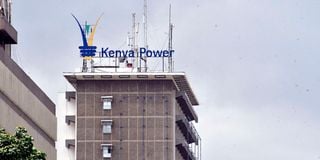
Kenya Power Company headquarters at Electricity House, along Harambee Avenue, Nairobi. 

Photo credit: Francis Nderitu | Nation Media Group

Kenya Power holds the largest share of non-guaranteed commercial loans among State-owned enterprises (SOEs), the latest National Treasury disclosures show, underlining taxpayers’ growing exposure to contingent fiscal risks.

The electricity distributor accounted for nearly a quarter (23.27 percent) of non-guaranteed debt reported by State-owned enterprises for the year ended June 2025.
Some 14 SOEs reported non-guaranteed debt amounting to Sh44.87 billion, equivalent to 0.26 percent of gross domestic product — a measure of all economic activities by the government, companies, and individuals.

The loans are contracted by the firms that play a strategic role in the economy without explicit government guarantees and, therefore, fall outside the public debt.

Although the loans are legally borne by the SOEs, Treasury acknowledges they represent contingent liabilities that could ultimately fall on the exchequer in the event of default, particularly for essential service providers such as Kenya Power, which cannot be allowed to fail.

Treasury officials say the disclosure of non-guaranteed debt reflects a deliberate reform push to improve oversight of financial dealings by SOEs.

“As a reform initiative, the government continues to expand reporting on public debt by including non-guaranteed debt held by SOEs to enhance accountability and transparency in public debt management,” the Treasury says in the latest annual debt management report.

Kenya Power holds outstanding non-guaranteed loans of Sh7.07 billion from Standard Chartered Bank and Sh3.37 billion from NCBA Bank, giving the utility a combined bank exposure of about Sh10.4 billion.

Kenya Power’s exposure closely rivals that of Kenya Electricity Generating Company (KenGen), which holds the single largest individual non-guaranteed loan—Sh10.34 billion from Absa Bank Kenya—and represents about 23 percent of the total non-guaranteed debt stock.

The Kenya Airports Authority follows with nearly a fifth (19 percent), or Sh8.98 billion, in outstanding loans from the Agence Française de Développement and the World Bank, denominated in foreign currency.

The Treasury data shows energy and petroleum firms dominate non-guaranteed public debt, underlining their considerable reliance on market-rate loans from local and international lenders.

Other energy SOEs with bank loans outside the country’s official public debt numbers include Geothermal Development Company, which carries non-guaranteed debt of Sh1.36 billion, borrowed from NCBA Bank.

The insolvent National Oil Corporation of Kenya has outstanding non-guaranteed loans totalling Sh5.98 billion. The financially paralysed State oil marketer, whose operations are in the process of being revived through a deal between the government and Rubis Energy, owes Sh3.0 billion to KCB Bank and Sh2.98 billion to Stanbic Bank.

The Treasury says it is in the process of rolling out a Government Investment Management Information System (GIMIS), a digital platform designed to improve the collection and monitoring of SOE debt data. Treasury expects that coverage and reporting of SOEs’ outstanding debt will improve over the medium term as the system is fully implemented.

The growing bank exposure to SOEs, largely energy utilities, has come at a delicate moment for the economy, with fiscal space constrained.

The public debt stock has since crossed the Sh12 trillion mark from September, with domestic debt accounting for over 55 percent of the total. While these borrowings helped finance infrastructure and plug budget shortfalls, they are now squeezing public finances as repayments fall due, sharply increasing debt service costs.

The Treasury has allocated Sh1.9 trillion for public debt service in the current financial year ending June 2026, an increase from Sh1.74 trillion in the previous year. About Sh1.1 trillion of that estimate will be spent on interest payments, while Sh803.7 billion will go towards repayment of principal—underscoring how debt obligations are increasingly crowding out spending on development and social programmes.

PAYE Tax Calculator

Note: The results are not exact but very close to the actual.