UK-based Circle Gas is leaning heavily on financing from I&M Bank Kenya to support its Kenyan subsidiary M-Gas, even as the group seeks to raise an additional $20 million (Sh2.5 billion) in fresh capital to fund expansion.
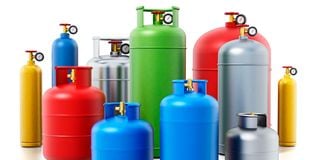
Financial disclosures filed in the UK show that M-Gas signed a Sh750 million secured line of credit with I&M Bank on February 9, 2023, to finance the purchase of smart meters, cooking stoves and liquefied petroleum gas (LPG) cylinders.
The facility attracts interest at the prevailing 91-day Treasury bill rate plus 4.026 percent per annum and is repayable in a lump sum within 24 months of the last drawdown. The final drawdown was made on May 31, 2023, with Circle Gas issuing a corporate guarantee to the lender.
On July 18, 2023, M-Gas secured an additional $30 million (Sh3.9 billion) line of credit from the lender to finance working capital and capital expenditure.
The facility is priced at the 91-day Treasury bill rate plus 4.482 percent—equivalent to about 20.2 percent per annum at the reporting date (year ended December 2024)– and each disbursement is repayable in monthly instalments over 60 months.
By December 2024, the full $30 million had been drawn down, up from $10.3 million a year earlier. Circle Gas has also guaranteed this facility.
“The Group has issued a guarantee to l&M Bank in respect of M-Gas’s repayment obligations,” the firm says.
Circle Gas’s 12 subsidiaries include M-Gas Limited and Circle Gas Limited in Kenya, as well as M-Gas Solutions Limited and M-Gas Resources Limited in Tanzania. In Kenya, M-Gas sells LPG under a ‘pay-as-you-cook’ model, targeting low-income households.
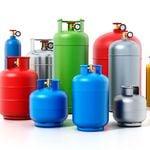
Its cylinders have smart meters that track gas usage and automatically disconnect the supply once the paid-for amount is consumed.
The group’s external net borrowings totalled $20.2 million in the year ended December 2024, compared with $14.9 million in 2023.
The loans largely helped finance smart meter and cylinder deployment. The group posted an operating loss of $24.2 million (Sh3.1 billion) for the year ended December 2024, down from $33.3 million the previous year.
Circle Gas projects significant cash needs through June 2026 and is working to secure new third-party funding to sustain growth, including more than $27 million (Sh3.4 billion) through the sale of carbon credits.
The company says it has an offer for future carbon credit certificate purchases worth the figure, of which $8.5 million has already been received. It is also negotiating with the Kenyan government to upgrade its carbon credits to Paris Agreement ‘Letter of Authorisation’ (LoA) status, which would potentially unlock over $9 million in higher-value credit sales.
M-Gas, in which Safaricom holds an 18.96 percent stake, has so far secured a Letter of Approval from the State. Late last month, the company said the planned carbon project “is now progressing toward the next stage of the authorisation process.”
Despite Circle Gas’s 2024 operating loss, the group reported positive operating cash flows of $1.7 million, compared with negative $5.1 million in 2023.
“Current year positive operating cash flow reflects receipts from carbon credit rights presales of $15.6 million ($12 million in 2023), and outflows from capital investments of $17.7 million ($17.5 million in 2023),” it said.
Cash flow projections to June 30, however, indicate the group will require additional net funding to meet liabilities, the firm’s directors said. The group’s evaluation assumes it will raise $20 million (Sh2.5 billion) in third-party funding by then to finance further expansion, including investment in smart meters used on its LPG cylinders. By December 2024, this funding had not been fully secured.
Without the new capital, the company has warned it could be forced to scale back investment plans to conserve cash.
In Kenya, the group is also pursuing an $8.2 million (Sh1 billion) value-added tax (VAT) refund from the Kenya Revenue Authority relating to pre-July 2023 VAT changes. It said it has been receiving monthly refunds of about $230,000 (Sh29.7 million) since 2024.