Time flies with great content! Renew in to keep enjoying all our premium content.
Prime
Milk crisis to get worse as New KCC exhausts its stock
Photo/File
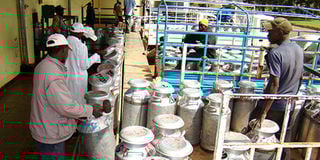
Milk delivery at the Eldoret New KCC plant. Shortage has worsened after some farmers opted for hawking.
An acute scarcity of milk is expected to hit the country later this month after New KCC exhausts the powder milk that it has been reconstituting to ease the shortage.
Chairman Matu Wamae said that the milk processor started converting powdered milk into liquid form even before the shortage that began two weeks ago, forcing retail outlets to ration the number of sachets sold to customers.
“What is in the market right now is part of the powder milk that we are reconstituting, an acute shortage should be expected once it is over,” said Mr Wamae.
He said that New KCC had Sh1.5 billion of powdered milk in stock but has since processed more than half.
Mr Wamae said that milk production had fallen by more than 50 per cent since January, aggravating a seasonal scarcity that coincides with the dry months between January and this month.
The shortage has been worsened by many dairy farmers opting to sell the commodity raw to consumers in order to reap from the prevailing high prices.
A litre of milk when sold through hawking goes for Sh50 while processors buy the same for less than Sh30.
“I earn almost double of what the milk processors pay farmers. That is why I have opted to hawk my milk,” said Mr John Chebet, a farmer in Uasin Gishu.
Kenya Dairy Producers Association chairman Peter Lelei said that drought and frost had reduced the supply of fodder, which supplements processed animal feed.
“When the frost hit in January, milk production dropped by 20 per cent in the first week, and the situation worsened with the onset of drought towards the end of the month,” said Mr Lelei who is also a dairy farmer in Uasin Gishu County.
Although the Rift Valley Province produces more than half of Kenya’s milk, Mr Wamae said Central Province had constant output even during drought because of better animal husbandry.
“Unlike Rift Valley where farmers rely on natural pastures, those in central have embraced zero grazing, which ensures constant supply of feed throughout the year hence maintaining milk production,” he said.
Mr Wamae urged farmers to store fodder for their animals during the rainy season to avoid such a shortages in future.
The dairy association accused processors of exploiting farmers through lower prices while consumers pay high prices for the products.
“New KCC gives us Sh28 a litre while they sell a 500mm packet at Sh60,” said Mr Lelei.
He said that importation of powder milk to address the shortage would only distort the market as happened two years ago because the imports would arrive in May at the earliest when supply would have stabilised.
“The milk glut that was experienced in 2010 was an artificial one created by unscrupulous business community who were out to make profits,” said Mr Lelei.
A meeting of stakeholders is expected on Wednesday to chart the way forward on the matter.