Mistakes that saw quashing of Sh5.9bn grain handling tender

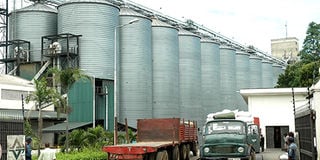
A lorry loaded with food leaves the Grain Bulk Handlers Ltd at the port of Mombasa as another lorry waits to be loaded.

Photo credit: File | Nation Media Group

For over 30 years, Kenya has only had one bulk grain handling facility located on berths B3-B4 at the Port of Mombasa, operated by Grain Bulk Handlers Limited (GBHL).

The company, now known as Bulkstream Ltd, uses privately owned equipment to convey grain directly to an offsite silo.
And during that time, Kenya Ports Authority (KPA) has developed three master plans — the 2004 master plan, which was in place for five years, the 2009 Masterplan, which was used for 10 years, and a third one that would apply for the next 30 years, from 2017 to 2047.

In the third master plan, KPA envisioned a second bulk grain handling facility, which was to be established at either Dongo Kundu in Mombasa or Lamu Port by 2023.

According to KPA, there was the need for reducing over- reliance on one provider for the entire country’s strategic food reserves, food security and nutritional needs of Kenyans.

The master plan showed that the grain handling berths produced a capacity of 2.4 million tonnes per year.

It was then deemed necessary to introduce “competition in the bulk commodity handling sector to ensure diversification and elimination of monopolistic tendencies” in compliance with the Competition Act.

KPA did not tender for the construction and development of the facility proposed in its master plan.

However, as the Supreme Court noted in a recent judgment, a number of companies, including Portside Freight Terminals Limited, expressed interest by submitting unsolicited applications and proposals for consideration by KPA.

Following receipt of the proposals, KPA’s managing director established a technical committee on July 14, 2020, to review and analyse the proposal by Portside Freight Terminals ltd.

The committee issued a report dated 28th August 2020, to the board.

The MD then wrote to the Treasury on March 11, 2021, requesting approval to use a Specially Permitted Procurement Procedure (SPPP).

In seeking the approval, the MD noted that the proponent would fully fund the project, the project’s proposed location was strategic and that the Mombasa Port being a high security installation, there was a need for security assurance.

Treasury CS authorised the use of SPPP on June 28, 2021, subject to the fulfilment of certain conditions.

Two weeks later, on July 15, 2021, KPA issued an invitation to tender to Portside Freight Terminals Limited, who in another two weeks, submitted its bid proposal on July 26, 2021.

The next day, the KPA procurement committee conducted the technical evaluation and found the tender to be responsive. One day later, in a letter dated July 28, 2021, Portside Freight Terminals Limited was invited for negotiations regarding their proposal.

The committee proceeded with the review, holding negotiations on July 29 and 30, 2021. Thereafter, KPA’s head of procurement provided his professional opinion on the tender by a letter dated August 2, 2021 and issued a notification of award to Portside Freight Terminals Ltd confirming the acceptance of its tender.

The speed at which the process was undertaken and the method employed, saw the tender challenged in court and was subsequently quashed by the Supreme Court on June 30, over illegalities identified by the court.

In the judgment, presided over by Deputy Chief Justice Philomena Mwilu, the Supreme Court noted that whereas procuring entities have the discretion to choose any one of the methods depending on diverse factors such as the nature of procurement requirements, timeframe and circumstances, the process must comply strictly with the law.

The judges said having chosen the SPPP, the onus was on KPA to show there were exceptional requirements that made “it impossible, impracticable or uneconomical to comply with the Act and the Regulations”.

The tender was first quashed by the July 2023 by High Court judge John Onyiego but Portside Freight Terminals ltd, a firm linked to Mining CS Ali Hassan Joho, successfully appealed against the decision.

Not satisfied by the move overturning the High Court decision, Busia senator Okiya Omtatah and Dock Workers Union, moved to the Supreme Court.

The union would later withdraw from the case, leaving Mr Omtatah and Katiba Institute, to proceed with the appeal.

Mr Omtatah argued that six other firms- Kilindini Terminals, Mombasa Grain terminal ltd, Kapa Oil Refinery, Africa Ports & Terminals, Multiship International and Kipevu Inland Containers Ltd- had legitimate expectation that their proposals would similarly be evaluated by KPA.

KPA confirmed that it received several unsolicited proposals from various parties, precipitating the establishment of a technical committee to evaluate the proposals.

The corporation said that after the evaluation, the technical committee found Portside’s proposal attractive, unique, viable, reasonable, cost- effective and in compliance with the master plan for the expansion of the port.

The court was told that the location of the proposed project was the first justification, that Portside Freight Terminals Ltd had land adjacent to the port, which it intended to use for the construction of ancillary facilities for use with the island berth.

In KPA’s view, the conventional procurement methods would not be suitable for the identification and harnessing of these strategic advantages.

The second justification was the advantage of the strategic partnership that Portside Freight Terminals Ltd offered, in terms of adjacent land in close proximity to the Port and the offer to construct a common user island berth facility at its cost.

KPA submitted that it would not spend any money towards its establishment.

This, according to KPA, presented a desirable opportunity for it to explore a strategic partnership with Portside Freight Terminals Ltd.

Having a strategic partnership for the purposes of enhancing efficiencies at the Port would not be realized if the conventional procurement methods were to be used, KPA argued.

Finally, KPA cited security as the third justification, contending that since the Port of Mombasa is a high security installation, and considering that it neighbours the Kenya Naval Base, it was essential that critical operations at the Port be conducted by persons who have been subjected to adequate security vetting.

According to KPA, conventional procurement methods under the Public Procurement and Assets Disposal (PPAD) Act do not ordinarily embed national security considerations in the selection process.

Portside Freight Terminals Ltd on its part, said its proposal was unique and, given the public interest and national food security risks involved, the Treasury approved the SPPP method. The firm submitted that the project would cost approximately $45 million (about Sh5.8 billion).

Further, KPA was required to show that the procedure adopted was in the public interest or interest of national security.

“By the language employed in the section, there has to be some reasonable rationale leading to the decision to invoke the SPPP as opposed to any other procurement procedure under the PPAD Act or other statute to ensure that the decision is justifiable, accountable, and does not unduly restrict competition without valid reasons,” said the judges.

Justices Mwilu, Mohammed Ibrahim, Smokin Wanjala, Isaac Lenaola and William Ouko said once CS Treasury approved the proposal, and upon KPA meeting the conditions set in the letter of approval, the next phase was to conduct a pre-qualification procedure in accordance with Sections 93 to 95 of the Public Procurement and Assets Disposal (PPAD) Act.

“The failure to do so was a significant omission and infraction whose effect was the infringement of Articles 10, 201 and 227 of the Constitution,” added the judges.

The judges said the procurement regulations establishes a four-step roadmap before the Cabinet Secretary can grant approval.
First of all, an accounting officer is to issue a written justification for intending to use the procedure.

The judges stated that the justification will be informed by the uniqueness of the procedure (SPPP) from the other 12 methods.
The second step is for an accounting officer to include the project to be procured in the procuring entity’s annual procurement plan (where applicable).

Thirdly, the court said, the accounting officer must prepare tender documents for the subject procurement, which will include specifications, conditions of tendering and contracting.

Lastly, the accounting officer will submit the tender documents and the proposed procedure to the CS for approval, detailing the justification for the use of the method.

“Beyond Regulation 107, Section 93 of the PPAD Act is critical in the overall determination of this ground. It requires, as a basic procedure prior to adopting any alternative procurement method like SPPP, that a pre-qualification procedure be conducted. This ensures that there is fairness, transparency and competitiveness,” said the judges.

The judges said what KPA granted to Portside under the PPAD Act was alien to the Act.

The court said the closest to what Portside proposed was Build-Own-Operate- Transfer scheme where the private party designs, constructs, finances, operates and maintains an infrastructure facility owned by the private party for a specified period, after which the private party transfers the facility to the contracting authority.

“We repeat that there is no provision for Design, Finance, Build, Operate, Maintain, and Transfer under PPAD Act; that none of the thirteen methods of procurement under PPAD Act has a provision that grants to a private party to operate the developed facility for a period of 30 years after designing and building it,” the apex court judges said.

PAYE Tax Calculator

Note: The results are not exact but very close to the actual.