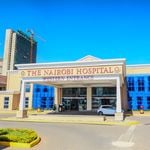
The High Court has temporarily halted the Nairobi Hospital's annual general meeting (AGM) scheduled for Friday, following a petition by Busia Senator Okiya Omtatah.
Mr Omtatah, alongside Bernard Muchiri and Naomi Misati, have questioned the legitimacy of the register of members, which determines voting rights at the AGM, claiming that it has been manipulated.
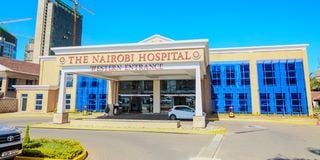
The petitioners further allege systemic mismanagement, which they claimed has pushed the hospital to the brink of financial and operational collapse.
“That a conservatory order is hereby issued restraining the 1st and 2nd Respondents (the board of management), whether by themselves, their agents, servants, employees, proxies, or any person acting under their authority, from convening, holding, conducting, facilitating, or in any manner whatsoever proceeding with the annual general meeting of the Kenya Hospital Association scheduled for February 6, 2026, or any adjournment or continuation thereof,” said the court.
The court stated that the order would remain in force until February 23, when the case would be mentioned or until further directions.
About 15 cases have been filed over leadership and governance issues at the premier facility, with the majority of them yet to be concluded.
The Busia Senator said the Nairobi Hospital is not an ordinary private entity but a premier tertiary healthcare institution with an overwhelming public interest that has evolved over seven decades into a regional medical pillar, providing essential and specialist services to millions of Kenyans and patients from across East Africa.
He said that once the AGM is held, irreversible governance actions will be undertaken, including elections, ratifications, and resolutions, which will fundamentally alter the governance structure of the hospital, rendering the petition useless.
The petitioners allege that audited losses exceed Sh3 billion, supplier arrears surpassing Sh4 billion, and the apparent disappearance or unaccounted-for status of approximately Sh9.1 billion in accumulated depreciation funds (with only Sh572 million traceable in cash equivalents).
The petitioners said relevant State agencies have failed to act decisively to protect this public asset, despite credible evidence and judicial findings highlighting grave misconduct.
They further alleged that governance has been captured through factional board infighting that has paralyzed decision-making, sidelined essential committees (including the Medical Advisory Committee (MAC), raising risks to clinical standards and patient safety), flouted procurement rules, and involved suspicious related-party transactions for personal gain.
Mr Omtatah said patient safety and professional standards have been compromised as clinical oversight structures, including the MAC representatives have been marginalized, which directly imperils the right to health.
“That faced with this institutional meltdown and the demonstrated inability of internal and regulatory mechanisms to provide a remedy, the Petitioners have been left with no alternative but to seek the intervention of this Honourable Court as the ultimate guardian of the Constitution and public interest,” Mr Omtatah said.
The petitioners will be seeking a declaration that The Nairobi Hospital, by virtue of its location on public trust land and its essential public health function, is an institution of paramount public interest subject to heightened constitutional accountability.
They will also be seeking an order compelling a multi-agency team comprising of the Directorate of Criminal Investigations, Ethics and Anti-Corruption Commission (EACC), Assets recovery Agency and Kenya Revenue Authority (KRA) to conclude the investigations they have been conducting into the affairs of the hospital and file a comprehensive status report in court within 45 days from the date of judgment.
The petition says the role assumed by The Nairobi Hospital during periods of regional crisis is neither incidental nor episodic, but reflects a settled institutional character shaped by history, capacity, and public reliance.
The petition further stated that during moments when neighbouring health systems are unable, constrained, or rendered unsuitable whether by medical complexity, security risks, political instability, or systemic overload the Hospital has repeatedly operated as a regional stabilisation and referral centre of last resort.