PwC seeks buyer of Koko Networks assets after collapse

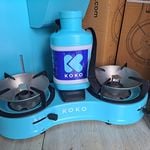
A customer refills a Koko fuel bottle at a smart dispensing unit in a refill shop. Koko Networks seeks buyers after carbon credit export denial forces the startup into administration.

Photo credit: Pool

Koko Networks administrators are seeking buyers for the clean-cooking startup’s assets in the wake of its collapse last month after it failed to secure approvals from the Kenyan government to export carbon credits.

The business advisory firm PricewaterhouseCoopers (PwC) said it is pursuing a sale or the acquisition of Koko’s specific assets, which include fuel-dispensing machines, vehicles, software and office equipment.

Koko filed for administration on the brink of bankruptcy on February 1 after Kenyan authorities refused it a Letter of Approval (LoA) to sell carbon credits in the lucrative compliance markets, the basis of the startup’s business model.

Compliance carbon markets are mandatory and government-regulated, targeting high-emission industries to meet legal targets, unlike voluntary carbon markets, which are self-regulated and used by companies and individuals to offset emissions voluntarily for sustainability goals. Credits in the compliance markets cost about $20 (Sh2,580), about 10 times the price collected in voluntary markets.

The State argued that the World Bank-backed startup would have exhausted Kenya’s share of the markets.

PwC’s George Weru and Muniu Thoithi have published a request for Expressions of Interest (EOI) on the sale as they work to rescue the startup.

“The administrators intend to run an investor/transaction process to explore credible options for either the going concern acquisition of the business and assets of Koko or for the acquisition of specific assets of the company,” they said in the EOI request published in the local dailies on Thursday.

Last March, the World Bank’s political risk insurer, Multilateral Investment Guarantee Agency (Miga), insured Koko’s Kenyan investment for $179.6million (Sh23.1 billion), in what was the world’s first carbon-linked political insurance coverage.

PwC did not comment on whether Koko is pursuing an insurance claim over the government’s breach of the contract, which could expose Kenya to a compensation bill of a similar amount. 

Koko’s failure to secure an LoA essentially denied it the revenue it needed to stay afloat. The company, which opened in Kenya in 2019, sold heavily subsidised bioethanol stoves and fuel to over 1.5 million low-income households at the time of its closure.

A cooking stove that should retail at Sh15,000 was sold for Sh1,500, while fuel priced at Sh200 per litre was sold at Sh100 through the company’s network of vendors. Koko recouped losses by relying on carbon credit sales in the global compliance markets used by airlines such as British Airways. They were sold under a scheme backed by the United Nations.

The credits are calculated from how much carbon emissions are avoided when Kenyans ditch kerosene and charcoal stoves for Koko’s bioethanol, which is made from molasses derived from sugarcane.

Koko’s administrators said they seek to rescue the company, “maintaining the business as a going concern” and securing a better return for creditors than liquidation. It is still unclear whether this involves restructuring the startup’s carbon credit-reliant model. PwC did not respond to Business Daily’s email request for comment. Mr Weru and Mr Thoithi were not reachable by phone.

Koko’s major assets include smart fuel-dispensing machines, tanker and depot systems, trucks and motorbikes, software platforms, intellectual property, office furniture and equipment such as computers.

“Review of the affairs of Koko indicates that significant capital will be required to resolve the insolvency of the company sustainably,” PwC said. The consulting firm has not disclosed the value of Koko’s assets.

Interested parties must submit details, including their profile, strategic rationale and proof of financial capability by February 26, per the EOI request.

Koko, co-founded by Greg Murray, Sagun Saxena and Nicholas Stokes, had invested about $300 million (Sh38 billion) in Kenya, its largest African market. The firm had a small operation in Rwanda, and its entire staff comprised 700 people.

In June 2024, President William Ruto’s government signed an investment framework agreement that would have allowed the firm to sell carbon credits into compliance markets under Article 6 of the United Nations Paris Agreement.

But in the wake of the fallout, the government argued that approving the startup’s request would have allowed a single company to exhaust Kenya’s share of carbon credits available in global compliance markets.

Trade Cabinet Secretary Lee Kinyanjui said the business model “did not align” with Kenya’s broader interests and would have locked out other eligible sectors such as agriculture and manufacturing.

The Environment Ministry, which approves carbon projects, has since declined to comment on the matter. According to Kenya’s Climate Change (Carbon Markets) Regulations, 2024, eligible carbon projects that benefit are subject to “verification of each project result by an independent auditor” and “adhering to national priorities, ecological, social, cultural and economic safeguards.”

PAYE Tax Calculator

Note: The results are not exact but very close to the actual.