Safaricom taps Sh18bn loan for Ethiopia expansion

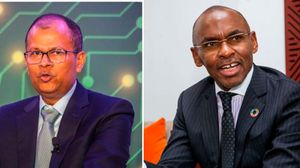
Safaricom Group CEO Peter Ndegwa speaks during the half-year results announcement, for the financial year 2025/2026, at Safaricom's headquarters in Westlands, Nairobi, Kenya on November 6, 2025. 

Photo credit: Reuters

Safaricom has borrowed $138 million (Sh17.8 billion) from Standard Bank to fund the expansion of its subsidiary in Ethiopia.

Africa’s largest bank by assets, operating in Kenya as Stanbic, is the sole arranger and lender of the loan. Safaricom will invest the capital towards expanding digital infrastructure and services in Ethiopia.

“The two businesses worked side by side in the development of the financial solutions that were bespoke to the business while responsive to the market’s needs,” Standard Bank said in a statement.

Safaricom entered Ethiopia in 2022, with Standard Bank as its advisors and financiers. The company has since then invested $2.27 billion (Sh292.77 billion) in telecom and digital financial services infrastructure in the country.

“We are honoured to have partnered with Safaricom again in enabling and supporting their ongoing vision to drive digital transformation and inclusion in Ethiopia,” said Anthony Ndegwa, Executive Vice President for Telecoms, Media and Technology at Stanbic Kenya’s Corporate and Investment Banking.

Safaricom CEO Peter Ndegwa said: “We are guided by innovation and strategic partnerships as we aim to transform lives at scale; empowering youth, entrepreneurs, and underserved communities to fully participate in Ethiopia’s digital economy and realise the promise of shared prosperity by 2030.”

“Through this partnership, we are given the opportunity to pursue this goal and grow further to digitally enable Africa,” Mr Ndegwa said.

Safaricom has over 10 million active customers in Ethiopia, Africa’s second-most populous market.

The telco says its 4G network now covers more than half of the 136 million population, with 3,141 live sites deployed across over 150 towns and cities.

Last week, the telco introduced a network-agnostic M-Pesa app called Lehulum, just two years after introducing the mobile money service in Ethiopia. It marked a major step in the country’s digital payments landscape, allowing any mobile user, regardless of their network operator, to download the app and use M-Pesa services.

This includes sending and receiving money, making payments, and accessing digital financial tools — services that have helped M-Pesa grow in double digits in Kenya since its 2007 launch. But the company has already reported restricted access among users of the state-backed telco Ethio Telecom, the country’s biggest player with 83.2 million customers as of June.

“M-Pesa Lehulum is currently not accessible on smartphones using mobile data services managed by Ethio Telecom, leaving our customers unable to log in, transact, or retrieve their funds,” Safaricom said in a December 5 statement.

In the six months to September, Safaricom recorded a smaller loss in Ethiopia, which contributed to a 52.1 percent rise in profit to Sh42.7 billion ($330 million).

Ethiopia's losses dropped by 59 percent to Sh15.2 billion from Sh19.4 billion in the first half of last year.

This was heavily impacted by a depreciation of the birr currency. Safaricom expects to make a profit in the country in the year ending March 2027.

PAYE Tax Calculator

Note: The results are not exact but very close to the actual.