The Treasury plans to spend Sh204 billion raised from the partial sale of government shares in Safaricom exclusively on commercially viable infrastructure projects.
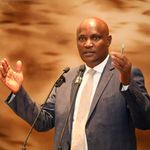
Treasury Cabinet Secretary John Mbadi told a joint sitting of the National Assembly’s Finance and National Planning, and Public Debt and Privatisation committees on Tuesday that the government has incorporated the National Infrastructure Fund as a limited liability company to manage the proceeds.
“The proceeds of the sale of Safaricom shares will be exclusively used to de-risk and lower the cost of infrastructure projects. I have already established the National Infrastructure Fund Limited Company, where I am the sole shareholder,” Mr Mbadi said.
He added that the fund is expected to raise between Sh500 billion and Sh600 billion through the partial divestiture of Safaricom, the planned Kenya Pipeline Company (KPC) initial public offering, and other government-owned enterprises.
Mr Mbadi said the partial divestiture of Safaricom shares is expected to generate about Sh204 billion ($1.57 billion) in gross proceeds by selling a 15 percent stake at a premium of 23.6 percent over the six-month volume-weighted average price ending December 2, 2025. He noted the transaction allows the government to mobilise substantial resources without increasing public debt or raising taxes.
Under the proposal, the government plans to sell six million Safaricom shares to South African telecom firm Vodacom at Sh34 per share.
The State currently holds 35 percent of Safaricom, valued at between Sh280 billion and Sh300 billion. Vodacom owns 40 per cent, while free float shareholders hold 25 percent.
The move follows the enactment of the Privatisation Act, 2025, which took effect on October 21, 2025. The law requires the Treasury CS to consult the public and all affected parties before identifying entities for privatisation, and mandates Cabinet and National Assembly approval before implementation.
Section 74 of the Act permits the sale of government shares in state-linked companies with Cabinet and parliamentary approval.
“This is the first step in the government’s vision to channel resources into critical infrastructure priorities, including energy, roads, water, and airports,” Mr Mbadi told the committee, marking the start of a month-long public participation exercise.
“Investment in priority national infrastructure is aimed at scaling public investment, bridging institutional capital with public projects, and fueling economic growth.”
Mr Mbadi said the funds would be ring-fenced and strictly used as seed capital. “This fund is not meant to address regional inequality. Its purpose is to separate commercially viable projects from the national budget, so non-viable projects can continue to be funded directly by the Exchequer,” he explained.
The fund is expected to support the construction of more than 2,500 kilometres of roads, 50 mega-dams, and commercially viable power generation projects. He emphasised that the proceeds will not be used for budget support, recurrent expenditure, or clearing pending bills.
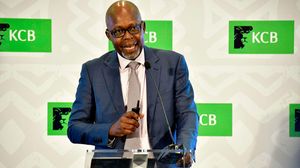
Treasury has engaged KCB Capital as the transaction adviser, which will earn 1.36 per cent, or about Sh3 billion. MPs questioned the need for external advisers given the Treasury’s existing Public Investments and Portfolio Management unit. Mr Mbadi said the funds would first be deposited into the Consolidated Fund before parliamentary appropriation to the infrastructure fund.
Addressing concerns over government control, he said the State would retain a 20 per cent strategic stake in Safaricom and two board seats to safeguard national interests. Vodacom has committed to no acquisition-related redundancies for three years, retaining Kenyan leadership on the board, and continued support for the Safaricom Foundation.
The transaction will require approvals from the Capital Markets Authority, Competition Authority of Kenya, Central Bank of Kenya, Communications Authority of Kenya, and the Nairobi Securities Exchange.
Mr Mbadi noted that Safaricom’s Ethiopian operations, launched in 2022, are yet to break even and continue to require shareholder support. “Vodacom, controlled by UK-based Vodafone, has been the strategic investor in Safaricom since 1998, providing technical and management expertise that has been a significant driver of the company’s success,” he said.
As of March 31, 2025, Safaricom had 533,549 shareholders holding a total of 40,065,428,000 ordinary shares.