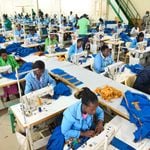
The government is set to lease Rivatex East Africa to a strategic investor on Friday, ending the search for a new partner to inject fresh capital into the textile company.
President William Ruto announced Wednesday that the Treasury and Ministry of Investments, Trade and Industry will facilitate the handover of the State-owned firm to a non-equity investor who has been identified following a tendering process earlier in the year.
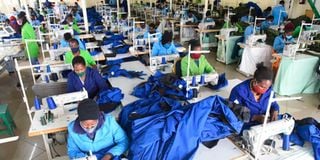
The undisclosed firm, which emerged victorious following tendering which started early this year, will lease, operate and maintain the mill and other assets of Eldoret-based Rivatex for 21 years in a bid to wean it from State support.
“By Friday, we are signing off the agreement for a private sector person to take over Rivatex,” Dr Ruto told the 5th Presidential Roundtable with Private Sector players at a hotel in Nairobi.
“We are bringing the private sector into the equation so that we can have an offtaker that also provides seeds and planting materials to farmers and provide a predictable offtake of the cotton products that feed into the whole chain of textiles industry because Rivatex has huge capacity for production of textiles.”
The government has injected more than Sh5 billion to modernise operations of the loss-making Rivatex, investments which started during the reign of Uhuru Kenyatta.
The upgrade has increased production capacity across the firm’s divisions, but this has created an idle capacity of over 90 percent given the prevailing working capital constraints.
“This non-equity arrangement is envisioned to support Rivatex by eliminating its reliance on budgetary allocations, enabling it to utilise the facility fully, attract capital investments and private sector expertise, further modernise the plant, and secure working capital,” Rivatex wrote in tender documents when it invited bids between February 24 and March 21, this year.
“There is still a need for additional investment through working capital and capital expenditure to enable Rivatex to meet its operational capacity.”
The firm said it was operating below the installed capacity, with spinning, weaving and wet processing units at a capacity utilisation of below five percent, eight percent and seven percent respectively.
The textile firm, acquired by Moi University for Sh205 million in 2007, has faced persistent financial and operational challenges due to high energy costs, inadequate raw materials and inefficient production processes, resulting in continued heavy losses.
The company reported a loss of Sh347.6 million for the year ending June 2023.
Rivatex owns a textile factory that transforms cotton lint into finished fabric.
The factory comprises four key production divisions, including preparation, spinning, weaving, and processing.
In addition, it owns an apparel and garments unit equipped with machinery to produce a wide array of outfits using cotton and cotton-blend fibres.
In the spinning division, the firm says daily yarn production has risen from an average of 2,000 kilogrammes to 12,000 kilogrammes while the weaving division now produces 25,000 meters of fabric per day, up from 10,000 metres.
Rivatex’s processing division has quadrupled daily fabric production from 10,000 metres to 40,000 metres.
The impending lease of Rivatex follows a similar process in the sugar sub-sector where four State-owned mills (Nzoia, Chemilil, Sony and Muhoroni) were handed over to strategic investors for 30 years.