The conclusion of ARM Cement’s liquidation has been held up by tax claims by revenue authorities in Kenya, Tanzania and Rwanda, delaying the disbursement of Sh548.8 million ($4.25 million) by the company’s liquidators to creditors.
ARM was put into administration in August 2018 after defaulting on its obligations, leading to sale of its assets to settle creditor claims.
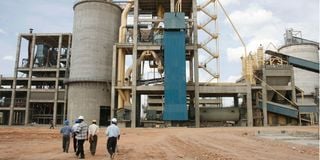
A report by the collapsed company’s joint liquidators Muniu Thoithi and George Weru states that the Tanzania Revenue Authority (TRA) has recently raised a tax assessment of Sh187.75 million (Tsh3.72 billion) against ARM Tanzania Limited, whose assets are currently being sold off.
The liquidators, in a report ahead of a creditors meeting to be held Friday, said these claims relate to transaction taxes such as VAT and corporate income taxes expected from the flow of funds of the transaction.
They added that since the tax heads are yet to crystallise as the transaction is yet to be completed, they have been engaging the TRA to resolve the issue and allow the liquidation to conclude —with an expectation that it will be completed within the first half of this year.
“Outstanding tax matters have remained one of the primary reasons for the delayed conclusion of the liquidation,” said the joint liquidators in their report.
The Rwanda Revenue Authority has also assessed ARM’s Kigali Cement Company Ltd (KCCL) for additional taxes, even though the distribution of the proceeds of the liquidation of the subsidiary has already been done.
“We understand that a process was commenced late 2025 by the Rwanda Development Board to formulate a framework for dealing with dormant companies. We expect that these two subsidiaries will be dealt with as part of the process,” said Mr Thoithi and Mr Weru.
In Kenya, the final liquidation and deregistration of ARM Cement Plc is awaiting the resolution of tax liabilities that predate the entry of the firm into administration in 2018.
The liquidators added that they will be engaging KRA to address the liabilities,and hope to resolve the matter by June 2026.
However, they do not expect the resolution of these tax claims to have a material impact on the residual amounts that are to be paid to creditors—beyond paving the way for the company to be struck off the registrar's records.
Following the sale of ARM’s assets, the administrators have over the years paid out a total of $62.84 million (Sh8.11 billion) to various creditors, against total claims of $154.41 million (Sh19.92 billion).
Preferential creditors have been paid their full claims of Sh406.4 million ($3.15 million), while secured creditors have received Sh6.87 billion ($53.28 million), representing 74.98 percent of their claims worth Sh9.17 billion ($71.06 million).
Unsecured creditors have been paid Sh827 million ($6.41 million), which is 7.99 percent of their claim of Sh10.3 billion ($80.2 million).
“It is estimated that the secured creditors of ARM (will receive) about 75 percent of their total reviewed claim amounts, while it is estimated that the unsecured creditors will recover between 7.9 and 8.3 percent of their total reviewed claim amounts from the sale of the company’s assets (including subsidiary interests),” said the liquidators.
In the year to September 2025, the liquidators held a balance of Sh548.8 million ($4.25 million) on the company’s books, having made payments of Sh320 million ($2.48 million) in the period.
Shareholders of the company, whose stock is listed on the Nairobi Securities Exchange (NSE), will not be receiving any dues after its wound up, since it is undergoing what is known as an insolvent liquidation where total liabilities exceed the total funds realised from sale of assets.
As a result, shareholders, including British International Investment (BII) and former chief executive officer Pradeep Paunrana, have been wiped out.
The company’s stock has been suspended from trading at the bourse since 2018, with a last traded price of Sh5.55 and a market capitalisation of Sh5.32 billion.