Time flies with great content! Renew in to keep enjoying all our premium content.
Prime
Twiga Chemicals wins fertiliser classification dispute against taxman
The Tribunal stated that the general note excludes only products where the fertilising elements are not essential constituents, which was not the case here.
The Tax Appeals Tribunal has allowed two appeals by Twiga Chemical Industries in a dispute over the import classification of its fertiliser products, dealing a setback to the Kenya Revenue Authority (KRA).
In both rulings, the Tribunal held that the KRA’s Commissioner of Customs and Border Control misclassified the goods and failed to follow established legal principles.

“The Tribunal finds and holds that the respondent was not justified in reclassifying the Appellant’s fertiliser product under HS Code 3824.99.90 as opposed to the appellant’s classification under HS Code 3105.20.00,” stated the tribunal.
The dispute arose after Twiga imported three water-soluble fertiliser products from Siberia, Holland BV in 2024 by sea. Twiga declared the goods under the customs’ harmonised commodity description code, which covers mineral or chemical fertilisers containing the three key plant nutrients: nitrogen, phosphorus, and potassium.
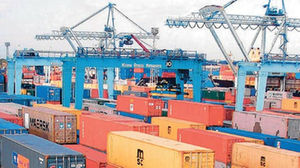
Customs officials at the Port of Mombasa rejected the classification and instead placed the products under a category for miscellaneous chemical preparations that attracted a higher duty.
The products were cleared in October 2024 only after Twiga provided a bank guarantee of Sh1.19 million. Customs officers later sampled the goods and confirmed they contained the primary fertilising elements.
Despite this, the Commissioner upheld the reclassification in decisions issued in December 2024 and January 2025.
Twiga challenged the decisions, arguing that the products were nutrient-based fertilisers whose essential character was defined by their NPK content. The company maintained that the trace elements present in the formulations did not alter their nature.
“The respondent failed to categorise the product as a nutrient-based fertiliser intended for plant growth and instead categorised it as a chemical product,” a company official told the tribunal.
“The product contains nitrogen, phosphorus, and potassium as its essential constituents,” the Tribunal heard in summarising Twiga’s argument, adding that micronutrients “neither transform the product into a chemical nor alter its essential purpose.”
The company also faulted the tax authority for ignoring binding decisions involving similar products. It said the Commissioner had acted “contrary to the clear provisions” of the East African Community Common External Tariff and the General Rules for Interpretation, which require goods to be classified according to their essential character.
The Commissioner defended the reclassification, arguing that the products contained both macronutrients and micronutrients and that the presence of trace elements brought them within a different category.
The agency also relied on part of the regulations, which state that where two classifications merit equal consideration, the heading that appears last in numerical order should be chosen.
The Tribunal rejected that reasoning. It held that the Commissioner misapplied the notes to Chapter 31 of the East African Customs Union Common External Tariff and wrongly treated the fertilisers as micronutrient preparations.
The Tribunal stated that the general note excludes only products where the fertilising elements are not essential constituents, which was not the case here.
“The essential character of the product as a fertiliser cannot exist without NPK,” it said in its analysis.
The Tribunal also dismissed the Commissioner’s preliminary objection that the appeals were filed out of time.