Uber ends Visa card payments in Kenya

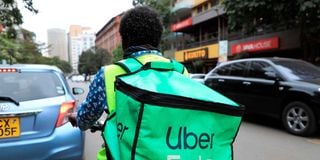
Uber Eats food delivery guy delivering food to customers using his bicycle in this photo taken on July 8, 2022.

Photo credit: File | Nation Media Group

Ride-hailing firm Uber has quietly stopped accepting Visa cards as a payment option for users in Kenya, forcing customers to switch to alternative methods like cash and mobile money.

The company said the decision was driven by rising payment processing costs. Uber confirmed that the change has been in effect since December and applies only to Kenya.
A notice displayed on the Uber app informs users that Visa cards are no longer supported.

“Visa cards are no longer accepted by Uber in Kenya. Please add a different payment method,” it reads. Customers can now only pay using cash, gift cards, Mastercard-linked cards, mobile money services such as M-Pesa and Airtel Money, or PayPal.

An Uber spokesperson told the Business Daily the company regularly reviews payment methods on a market-by-market basis “to ensure we’re keeping costs reasonable while balancing any potential impact on consumer experience.”

“We’ve taken this step as a result of this review process,” the official said. Visa cards are the most widely used in Kenya, with Mastercard being a major rival.

Uber lets users add their card details to their accounts for seamless payments after rides or for purchases on Uber Eats, the online food ordering and delivery platform that the American company owns.

Businesses incur card payment charges of around 1.5 percent to 3.5 percent of each transaction, covering interchange fees to the cardholder's issuing bank, assessment fees to card networks like Visa and Mastercard, and payment processor fees to the company handling the transaction.

The latest move follows a wave of complaints last year from Kenyan users who rely on card payments, citing recurring billing problems on the platform.

Uber did not link the Visa suspension to any of the complaints.

Some customers reported being double-charged after paying by card, only for taxi drivers to claim they had not received payment and demand settlement via mobile money.

Others said trips were not properly ended in the app, resulting in pending transactions or inflated charges on their cards after the ride had already been completed.

Users have also previously flagged what they described as unauthorised deductions, including charges for trips they did not take or had cancelled, as well as disputed transactions linked to Uber Eats.

Uber has previously said it investigates such complaints and that any driver found culpable faces potential deactivation on the platform.

PAYE Tax Calculator

Note: The results are not exact but very close to the actual.