Time flies with great content! Renew in to keep enjoying all our premium content.
Prime
Sh3bn unpaid tuition fees choke seven public universities
Reports by the Auditor-General reveal that by the end of June 2025, the University of Eldoret was owed Sh890.9 million — the highest amount of unpaid school fees among the seven public institutions.
Seven public universities are struggling to collect more than Sh3 billion in unpaid school fees from current and former students, new disclosures show, signalling their huge exposure even as they face financial difficulties.
The universities are reported to be owed Sh3.17 billion by students, exposing them to potential losses since some of the defaulters have already graduated.
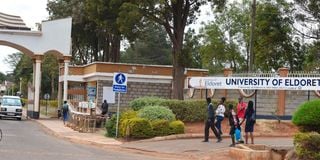
Reports by the Auditor-General reveal that by the end of June 2025, the University of Eldoret was owed Sh890.9 million — the highest amount of unpaid school fees among the seven public institutions.
“Further review of the records revealed that out of the student debtors' balance of Sh890,879,661, an amount of Sh222,645,414 had been outstanding for a period of more than one year. Management did not explain the measures being taken to recover the long outstanding receivables from the affected student debtors,” Auditor-General Nancy Gathungu said.
Ms Gathungu observed that debts owed to the university increased by more than half a billion shillings, or 172 percent, during the year ending June 2025, casting doubt on the institution’s ability to recover them.
During the year, the university management made provisions of Sh17.8 million, underlining concerns that part of the unpaid fees could turn into bad debt.
Policy breaches
A separate audit of Maasai Mara University shows that students owed the institution Sh596 million by the end of June last year, contrary to its fees payment policy, which requires all students to clear fees at the beginning of the semester, “and any student who shall not have settled all fees by that period shall automatically defer the semester.”
“However, review of the supporting documents provided for audit review indicates that the students, despite having fee balances, were allowed to graduate, attend classes, and sit for end-of-trimester exams,” the public auditor revealed.
While it is unclear how many students were allowed to graduate with fee balances and how much they owed individually, auditors noted a clear risk that the balances may not be recovered.
Besides unpaid school fees, Maasai Mara University also had issues with unallocated Higher Education Loans Board (Helb) funds and bursaries from various public entities amounting to Sh12.26 million.
“These balances were received from various National Government Constituency Development Funds (NG-CDFs), counties, and the national government but were not posted into the students' accounts and therefore remain unallocated in the records and not being put into proper use as initially intended,” Ms Gathungu said.
Nyeri-based Dedan Kimathi University recorded school fees arrears of Sh584.2 million, with records showing that 21.4 percent of the unpaid fees date back to 2010, exposing weaknesses in the institution’s collection system.
The university’s debt management policy requires all fees to be paid in full before the start of the semester, or in instalments.
“In the circumstances, the university's failure to implement the debt management policy may lead to losses to the Institution and can adversely affect cash flow and the ability to fund ongoing operations,” the public auditor warned.
Mounting pressure
Unpaid school fees at Chuka University hit Sh482.9 million by the end of June 2025, with more than three-quarters of the debt, amounting to Sh380.3 million, accumulated in just one year.
At Turkana University College, student debtors had a balance of Sh161.85 million by the end of June last year, accounting for 88 percent of the institution’s total debts.
“The student debtors increased by Sh84,089,886 or 108 percent from Sh77,764,434 reported in the previous financial year,” Ms Gathungu said.
The public auditor noted that the number of student debtors has been growing steadily at the institution over the years, warning that the trend could plunge the university into financial distress if not addressed.
Tharaka University also recorded delays by some students in paying school fees, with unpaid amounts reaching Sh136.76 million, although the university allowed them to sit examinations.
At Machakos University, management blamed delayed fee collection for a 134 percent rise in debts owed to the institution, bringing the total to Sh558 million.
The university management explained that the increase in debtors was mainly driven by “fees collection from the student-centred model of funding.”
“As at 30 June, 2025, Sh135,234,394 was due from the Universities Fund for scholarship and Sh178,689,223 from Helb for loans relating to the students-centred funding model,” Ms Gathungu said.
The university said it had been unable to lock out students with fee balances due to a conservatory order issued in August 2024, which prohibits public universities from denying admission or learning to students who fail to pay fees under the new higher education funding model.
Refund claims
Audits did not provide an account of unpaid school fees at Garissa University, but noted that students with outstanding balances were allowed to register for subsequent semesters before clearing arrears.
“This led to the accumulation of students' fees debts contrary to the fees policy that requires students to have cleared their fees balance before the start of the semester.”
As universities are faulted for lacking effective measures to collect fees, some students have also struggled to recover excess amounts paid, with audits revealing that two institutions owe former students Sh145 million.
Dedan Kimathi University is holding Sh47.5 million paid by former students between 2007 and 2020, despite the students having graduated long ago.
Maasai Mara University also owes former students Sh97.8 million in fee prepayments, including Sh53.9 million dating back to between 2009 and 2020 that had not been refunded.
“This was contrary to the University's fees payment policy, 2018, which stipulated the process of refunding school fees and states that refunds due to overpayment will be paid in full (100 percent) to the sponsor after completion of studies and clearance from the University,” the public auditor observed.