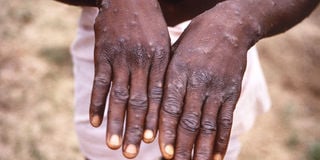
With Mpox cases now confirmed in 23 counties and over 300 infections, Kenya is once again facing a silent but gradually building public health emergency that tests its outbreak preparedness.
Beyond the immediate concerns of isolation, surveillance and public messaging, the resurgence of Mpox is exposing a deeper vulnerability. Kenya still lacks the ability to produce and distribute its own vaccines.
At the heart of this challenge lies the Kenya BioVax Institute, a state-owned organisation founded in 2021 with the ambitious aim of establishing Kenya as a leading regional vaccine manufacturer.
Yet nearly four years later, BioVax has not produced a single dose.
In their Interim Feasibility Study Report for the Smart Vaccine Manufacturing Facility Project, however, the BioVax Institute and the Kenya Vaccine Consortium emphasised Kenya's readiness for local vaccine production, highlighting the integration of smart manufacturing technologies and the enhancement of pharmacovigilance and regulatory systems.
“This submission marks a significant milestone for the project and reaffirms the country's commitment to establishing a robust and forward-looking vaccine ecosystem,” said Cecilia Wanjala, acting CEO of BioVax.
In 2022, Kenya announced plans for a Sh2 billion fill-and-finish facility in Embakasi, Nairobi, with the aim of reducing reliance on vaccine imports. However, the Africa Centres for Disease Control and Prevention (Africa CDC) has confirmed that the project has stalled and remains non-operational.
The Africa CDC has long advocated that 60 percent of the vaccines used in Africa should be produced locally by 2040. However, the continent's vaccine output currently stands at less about one percent.
While Kenya is struggling to realise its vision of local manufacturing, the global biopharmaceutical industry is seeing Africa as a key growth market.
Moderna's 2022 announcement of a $500 million (Sh64.6 billion) mRNA vaccine manufacturing facility in Kenya was initially welcomed as a potential game-changer. Had the project proceeded as planned, the plant, intended for Tatu City, would have established Kenya as a continental hub for advanced biologics.
Unfortunately, this project was halted in 2024. Moderna confirmed that it had paused the project due to sharply reduced demand for Covid-19 vaccines in Africa, compounded by order cancellations and losses and write-downs totalling over $1 billion globally. The land was never purchased and construction never began.
"Moderna needed to reassess the most effective way to ensure equitable access in the short term," explained Shannon Thyme Klinger, the company’s Chief Legal Officer.
In response, the Africa CDC issued a strongly worded statement, asserting that the company's justification masked deeper inequities in vaccine access. They noted that fewer than five percent of the vaccines administered in Africa were supplied by Moderna, with many arriving too late to be useful after wealthier countries had secured their own supplies.
The Mpox outbreak has renewed interest in Kenya from various foreign vaccine suppliers. One of the few WHO-approved Mpox vaccines is the smallpox-derived MVA-BN vaccine, which is marketed by the Danish firm Bavarian Nordic.
As Mpox outbreaks expand across Africa, Kenya's role as a regional health influencer is attracting attention.
“Kenya's market size, cross-border connectivity, and experience in vaccine deployment make it an ideal early adopter,” stated Dr Evaline Wanjiku, a pharmaceutical policy analyst. “We can expect foreign companies to pursue supply agreements or public–private partnerships as demand increases.”
Kenya’s human vaccines market is currently relatively small but growing. It was valued at approximately $101 million (Sh13billion) in 2024, according to Statista. However, projections suggest that it may decline to around $66 million (Sh8.5billion) by 2029 due to changing demand trends and product cycles.
Although progress in Kenya's manufacturing sector has stalled, its research and development (R&D) ecosystem remains active. The Kenya Medical Research Institute (Kemri) plays a pivotal role in advancing vaccine science in the country. Kemri has led or supported numerous clinical trials, particularly those relating to malaria, cholera and Rift Valley fever.
In 2024, Kenya signed a landmark agreement with the International Vaccine Institute (IVI) to establish the institute’s East Africa hub in Nairobi. This partnership aims to enhance R&D capacity, build regional trial networks, and facilitate technology transfer.
"Following collaborative sessions with the Government of Kenya to establish IVI’s Country and AVEC Africa Project Office, we are excited to begin operationalising this new project. Together, we will continue to build a project-driven network of partners, creating an integrated and sustainable vaccine ecosystem that meets the needs of Kenya, the region, the continent, and beyond,” said Dr Douglas Shaffer, IVI’s Deputy Director General of Global Affairs and Communications.
The government has also made strategic infrastructure investments. As part of its universal health coverage agenda, Kenya has expanded its cold-chain logistics, upgraded its national laboratories and constructed regional vaccine storage hubs.
Despite these advancements, Kenya's regulatory system remains a limiting factor. Although efforts are underway, the country has not yet reached WHO Maturity Level 3 (ML3), the internationally recognised benchmark for regulatory systems capable of approving, monitoring and ensuring the safety of vaccines and other medical products in accordance with global standards. Achieving ML3 is essential if Kenya is to become a trusted manufacturer and exporter of vaccines across Africa and beyond.
Additionally, Africa-led breakthroughs are gaining global recognition. The R21/Matrix-M malaria vaccine, developed by Oxford University and produced by the Serum Institute of India, underwent pivotal clinical trials in Kenya and Burkina Faso. Its high efficacy, low cost and WHO approval in 2023 have generated hope for its widespread use across the continent.
Meanwhile, the WHO’s mRNA vaccine technology transfer hub in Cape Town is training scientists, including Kenyan scientists, to develop open-source vaccines independently of Big Pharma licences. This shift could empower African countries to respond swiftly and autonomously to future pandemics.
The Africa CDC has identified Kenya, Senegal, South Africa, Egypt, Nigeria and Rwanda as priority countries for vaccine investment, given their scientific capacity and regional influence. However, Kenya's progress has been slow, hindered by regulatory gaps, underfunding, and insufficient engagement from the private sector.
In Senegal, the Institut Pasteur in Dakar is a leading manufacturer of WHO-prequalified yellow fever vaccines and is collaborating with BioNTech to develop mRNA capabilities. South Africa's Biovac Institute has partnered with Pfizer to produce Covid-19 vaccines and is involved in the WHO mRNA technology transfer programme. Similarly, Biovaccine Nigeria Limited (BVNL), a joint venture between May & Baker Nigeria Plc and the Nigerian government, aims to produce routine immunisations domestically.