Kenya reproductive health projects hit as US cuts funding

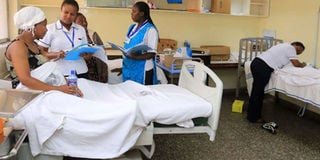
Nurses attend to an expectant woman in hospital.

Photo credit: File | Nation Media Group

Kenya’s sexual and reproductive health programmes have been dealt a severe blow in the latest foreign policy directive by the US government, putting the lives of millions, especially women and children, at risk.

The US on Wednesday announced that it would withdraw from 66 international organisations, including 31 UN entities.
Among the hardest hit is the United Nations Population Fund (UNFPA), an agency that has become deeply embedded in Kenya’s fight against teenage pregnancy, maternal mortality, and reproductive health inequity.

The reproductive health programmes in Kenya supported by UNFPA include family planning and contraceptive services, antenatal and maternal health care, HIV prevention for young people, pregnancy prevention programmes, and services to reduce unsafe abortions.

“The Trump Administration has found these institutions to be redundant in their scope, mismanaged, unnecessary, wasteful, poorly run, captured by the interests of actors advancing their own agendas contrary to our own, or a threat to our nation’s sovereignty, freedoms, and general prosperity,” reads the statement by Secretary of State Marco Rubio.

“It is no longer acceptable to be sending these institutions the blood, sweat, and treasure of the American people, with little to nothing to show for it. The days of billions of dollars in taxpayer money flowing to foreign interests at the expense of our people are over.”

This comes almost a year after President Donald Trump released an executive order that saw the United States Agency for International Development (USAid) —the lead US Government agency— scrapped in a move that signaled a broader retreat from multilateral development partnerships.

The US has historically been UNFPA’s largest donor. In 2023, it contributed $30.6 million to core resources and over $130 million for humanitarian work.

By 2024, the US provided 14.5 percent of the organisation’s total government revenue. Every year, approximately 330,000 adolescent girls in Kenya become pregnant—one in six girls aged 15 to 19.

Among young people aged 15 to 24, Kenya records 42 percent of all new adult HIV infections. Meanwhile, Kenya’s maternal mortality ratio stands at 362 deaths per 100,000 live births.

Over the years, UNFPA has positioned itself as a critical partner in addressing these challenges through innovative programming, commodity procurement, and technical support.

One of its flagship interventions is the Adolescent Sexual and Reproductive Health Development Impact Bond. Launched with a funding of $10.1 million (Sh1.3 billion), this program operates across 10 high-burden counties including Nairobi, Mombasa, Kisumu, and Homa Bay.

Using a digital platform called Tiko, it connects vulnerable adolescent girls with free, youth-friendly sexual and reproductive health services.

Building on a pilot phase that reached 362,000 girls and exceeded targets by 262 percent, the current phase aims to reach 500,000 girls while equipping 300 public health facilities. Besides service delivery, the programme also addresses privacy concerns and bias that discourage adolescents from seeking help.

However, while UNFPA’s work has relied on diverse funding from the UK, Norway, Sweden, and other European donors, the US withdrawal could create funding gaps that threaten its ability to reach the targeted 500,000 girls.

In 2022, the agency received £500,000 (approximately Sh86.7 million) from UKAid to procure family planning kits for 300 facilities, projected to avert over 26,000 unintended pregnancies and 6,000 unsafe abortions.

Currently, 14 percent of married women aged 15 to 49 have an unmet need for family planning. In February 2023, UNFPA handed over Sh500 million worth of contraceptives and reproductive health supplies to the Ministry of Health. A 2018 survey found only 57 percent of facilities had all five essential family planning items, with stock-outs remaining common.

UNFPA has also worked to reduce maternal mortality through partnerships targeting the six counties with the highest burden. In Kisumu County, these investments helped increase fourth antenatal care visit attendance from 39 percent in 2017 to 64 percent in 2021.

Kenya has committed to funding 100 percent of family planning commodities domestically by 2026 but hasn’t reached that goal. In the current financial year, the country allocated Sh890 million for contraceptive procurement, but UNFPA’s support has been essential for filling gaps in marginalised counties where government reach is weakest.

PAYE Tax Calculator

Note: The results are not exact but very close to the actual.