Vaccine manufacture plan in new phase on World Bank nod

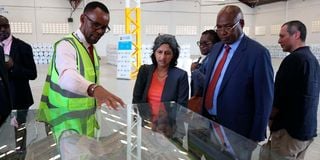
Kenya BioVax Institute CEO Dr Michael Lusiola (left) showing an architectural plan model to the World Bank Vice President for Human Development Mamta Murthi (centre) and State Department for Medical Services Permanent Secretary Harry Mutai when they toured Kenya BioVax Institute in Embakasi, Nairobi on February 7,2024.

Photo credit: File | Nation Media Group

Kenya is set to begin the second phase of its vaccine manufacturing programme after the World Bank endorsed the completion of Phase One at the BioVax Institute's facility in Embakasi, Nairobi.

Phase One focused on enabling works – the essential groundwork required before installing specialised vaccine production machinery.
This included structural renovations, installation of clean water and effluent-treatment systems, power stabilisation units, and a fully integrated Heating, Ventilation, and Air Conditioning (HVAC) system designed to maintain the sterile conditions critical for vaccine production.

The World Bank's assessment confirms that the facility now complies with biosafety and environmental standards and aligns with the World Health Organisation’s Good Manufacturing Practices (GMP) for sterile production.

“Launch of the Final Feasibility Report for the Smart Vaccine Manufacturing Facility Project marks a pivotal step toward establishing a modern end-to-end vaccine manufacturing ecosystem in the country,” said Dr Charles Githinji, chairperson of the Kenya BioVax Institute Board.

“Building on last year's interim report, the final study reflects extensive consultations across policy, research, academia, and industry. It outlines a clear roadmap for developing a facility capable of producing safe, effective, and affordable vaccines for Kenya and the region.”

With Phase 1 complete, the institute will now install high-precision fill-finish machinery and establish advanced quality-control laboratories—essential upgrades to produce vaccines that meet international standards and ensure Kenya can operate a globally competitive manufacturing facility.

The equipment will enable the facility to package vaccines in sterile conditions and conduct rigorous testing to guarantee product safety and efficacy.

Meanwhile, backed by an Sh8 billion World Bank package, the Institute will begin trials of locally made pneumonia and typhoid vaccines by 2027.

PAYE Tax Calculator

Note: The results are not exact but very close to the actual.