Nile perch exports hit by price war squeeze

Regional exporters fear being locked out of EU market.

Massive price undercuts by the rival Pangasius species have dealt a fresh blow to the region’s Nile perch exports to the EU, further dampening the outlook of an industry already hard hit by production slumps.

A latest market outlook report by the Food and Agriculture Organisation (FAO) showed that exporters from Kenya, Uganda and Tanzania are feeling the squeeze of the price shift that has seen shipments to the prime European market slump by 10,000 tonnes in 2008 alone.
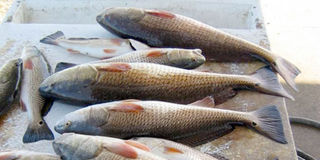

This is mainly caused by the strong competition of Pangasius fillets in the market. Prices of Nile perch fillet are relatively low at the moment at 6.20 euros per kilogramme (kg), which compares with 7.00 euros per kg a year ago. Pangasius on other hand sells between 5.7 and seven euros per kg.

“Nile perch resources are under stress and production is going down. The three producing countries report lower exports of fillets to the EU, the main market for this product. Prices are going down, as the competition of cheap Pangasius is felt.

In this bleak environment, the only hope is adding value to the product, through certification schemes,” FAO said in its Nile Perch August 2009 market report.

The Lake Victoria Fisheries Organisation (LVFO) estimates that the Nile Perch stock was down from 1.9 million tonnes in 1999 to 370,000 tonnes last year even though catches are now controlled and several management measures are in place.

“Unfortunately, some illegal fisheries that escape control do occur on the lake. Without doubt, an important role could be played by the processing industry, if they refused to buy from unknown suppliers,” the organisation said.

The latest price onslaught from the Pangasius species in the international markets is attributed to a massive build up of stocks after two key buyers—Egypt and Russia, temporarirly halted imports of the commodity earlier this year on consumer safety concerns.

“During the first months of 2009 Pangasius was under pressure, as Russia and Egypt banned imports. In addition, negative press coverage in Italy and Germany scared consumers away from buying of Pangasius. All over the world, local fishermen are complaining that the fish from Viet Nam is creating unwanted competition by undercutting prices substantially,” FAO’s Globefish market report said.

And in what is causing jitters among East African Nile Perch exporters, Pangasius fillets are currently selling in Europe for less than 10 euros per kg—the only of its kind. Analysts, however, said the price cuts on Pangasius fillet were also having a counter effect on production as farmers began cutting back on production for fear of burning their fingers.

For instance, as survey by FAO showed that in Viet Nam,one of the world largest producers of Pangasius, farmers were already slowing down on production because of the depressed prices.

“In the Mekong Delta, the country’s major Pangasius breeding region, the area devoted to breeding the fish was reduced by 600 hectares, to 5,240 hectares at the end of last year. In provinces that are leading producers of Pangasius, such as An Giang and Dong Thap, 30 per cent of the ponds are lying unused after farmers suffered losses because of oversupply last year,” the organisation said.

As a result of the reduction in supply, prices were moving upwards in the opening months of the year, both in Viet Nam and in the European market. This price increase came to a stop in May 2009, as competing species report declining price levels. Prices of Pangasius at the origin started to decline sharply.

Statistics showed that after nearly a decade of developing Pangasius breeding and processing, the fish is exported to 107 countries and territories with Viet Nam alone planning to produce between 1.3 million tonnes and 1.5 million tonnes, and export $1.5 billion worth of the Pangasius products in 2009.

In 2008, the Mekong Delta produced 1.2 million tonnes and exported 633,000 tonnes of Pangasius products worth $1.4 billion. In the first four months of this year, Viet Nam earned $375 million from exporting 163,000 tonnes of pangasius.
, a slight decrease compared with the same period last year.

The main export recipient of Pangasius fillets was the EU with 65,000 tonnes, or 40 per cent of the total. Within the EU, Spain is the main importer of pangasius from Viet Nam, reporting a 10 per cent increase in its imports with market analysts saying in the present economic situation, the Spanish consumer prefers the relatively cheap pangasius fillet over more expensive traditional products.

The threats of the Pangasius species is however not in the East African Nile Perch industry alone,the US International Trade Commission announced in June 2009 that it would keep the tariff on frozen fillets of Vietnamese catfish, known in the US as ‘basa’ and ‘tra,’ following fears that lifting the duty would harm the domestic catfish industry within a ‘reasonably foreseeable time.’

“This decision did not come as a surprise. At present, Vietnamese exporters are more concerned with an upcoming decision as to whether to reclassify basa and tra as catfish under the US farm bill. This would mean more severe testing for antibiotics,” FAO said.

PAYE Tax Calculator

Note: The results are not exact but very close to the actual.