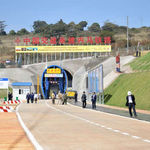
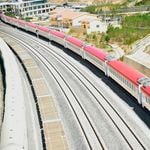
The National Treasury has allocated an additional Sh14 billion to extend the standard gauge railway (SGR) from Naivasha to Malaba via Kisumu, pointing to President William Ruto’s resolve to complete the modern railway to the Ugandan border.
Yesterday, the National Assembly received a new supplementary budget that increases the allocation for extending the railway line from Naivasha to Kisumu and eventually to Malaba, pushing its total allocation to Sh30 billion for the financial year ending June.
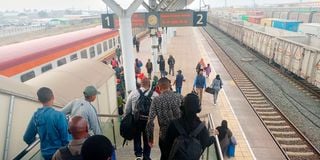
Extension of the modern railway had been allocated Sh16 billion in the original budget estimates that were tabled in Parliament in June last year.
Funding will be drawn from ‘receipts of taxes on goods and services’ under the Appropriation-in-Aid (AIA) category. This distinguishes the financing from the Consolidated Fund —the Treasury’s primary account at the Central Bank of Kenya— which is typically reserved for ordinary taxes such as income tax, value-added tax, and excise duties.
Treasury reports estimate that construction of the SGR —currently stopping abruptly in Suswa, a small town in Narok County— will cost Sh502.9 billion.
President Ruto’s government expects to secure most of the financing, about Sh455.35 billion, from undisclosed foreign investors.
The government is currently pursuing up to Sh390 billion ($2.6 to $3 billion) securitised bond to finance the SGR extension from Naivasha to Malaba.
This “creative financing” strategy aims to bypass new traditional external debt by leveraging future tax revenues.
Nairobi says it is in the advanced stage of the expansion of the SGR, and has even started land compensation, having finished the feasibility study.
The Kenya Railways Corporation has said it would acquire more than 5,000 acres of land to facilitate the expansion of SGR.
This “creative financing” strategy aims to bypass new traditional external debt by leveraging future tax revenues.
On the other side of the border, Uganda has also started the process of building its section of the SGR to Tororo, which borders Malaba on the Kenyan side.
Kenya expects the extension of the SGR to give impetus to the modern railway, which is facing cut-throat competition from trucks owing to its abrupt termination in Suswa, denying traders the convenience of last-mile connectivity.
However, a document by the Ugandan Ministry of Works and Transport said that its SGR line would also run from the border with Tanzania through the south and southwest of Uganda, ending at the town of Mpondwe on the border with the Democratic Republic of Congo.
This means that Mombasa port would face fresh threats of competition as the SGR would provide direct access to the rival port of Dar es Salaam.
“The main objective of the project is to connect the vast and mineral-rich regions of both countries (Uganda and Tanzania) to the port of Dar es Salaam ... whilst saving time and transportation costs,” Reuters quoted the Uganda document.
In 2014, the Government of Kenya entered into a tripartite agreement with the governments of Rwanda and Uganda to construct a standard gauge railway from Mombasa through Kampala, Uganda, to Kigali, Rwanda.
However, the SGR ended abruptly in the Rift Valley town of Suswa, with China reportedly refusing to finance the last leg of the modern railway after failing to strike an agreement with Uganda.
The Chinese-built SGR from Mombasa to Naivasha was constructed at a total cost of over Sh600 billion with loans from the Exim Bank of China.
The first phase of the SGR, linking Mombasa and Nairobi, was completed in 2017 at $3.8 billion (Sh490.92 billion).