KPC IPO oversubscribed, raising Sh106bn for State

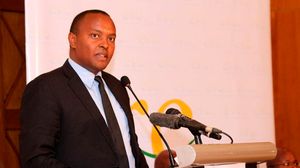
Kenya Pipeline Company CEO Joe Sang during the IPO launch.

Photo credit: Pool

The Kenya Pipeline Company’s initial public offer (IPO) has received a 105.7 percent subscription ⁠rate, offering the State the targeted Sh106 billion on support from Uganda and local institutional investors.

The IPO, which comes nearly two decades after the State sale of Safaricom in 2008, received most of its subscriptions from local institutional investors and East African Community (EAC) investors.
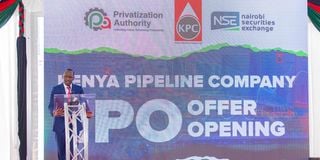
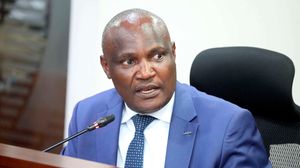
National Treasury Cabinet Secretary John Mbadi, who presented the results of the IPO on Wednesday, has deemed it a success and a reflection of Kenya’s mature economy.

“The finalisation of the KPC IPO is a significant milestone. At its core, it speaks to how the government prudently manages its assets,” CS Mbadi said.

“The successful KPC IPO is a clear reflection of the maturity of Kenya’s economy.”

The State was selling a 65 percent stake of KPC or 11.8 billion shares via the Nairobi Securities Exchange (NSE).

The Kenya Pipeline IPO was priced at Sh9 per share for the offer that opened on January 19 and closed on February 24, after a three-day extension, amid a split on views over its valuation.

The government has accepted Sh106.3 billion from investor bids, there being no green shoe option to accept more funds beyond the offer of 11.8 billion shares.

Investors applied for 12.4 billion shares, meaning the State will refund Sh5.4 billion due to the oversubscription.

The new shares will start trading at the NSE from Monday.

Local institutional investors, including the National Social Security Fund (NSSF), will become the largest shareholders in KPC with a 41 percent stake, with the government being the second-largest holder through its retained 35 percent stake.

EAC investors will be the third-largest shareholders in KPC, with a 21.2 percent stake in the company, largely covering investments by the Uganda National Oil Company (UNOC), with a smaller portion of shares purchased by Rwanda’s pension industry.

Local retail investors have taken 2.56 percent of shares, foreigners 0.02 percent, employees 0.06 percent and oil marketers 0.014 percent.

Burdened by high national debt, limited room to raise taxes and annual loan repayments that consume 40 percent of government revenues, the State has sought new funding models, including divestiture from State companies.

“The proceeds from the IPO shall be deployed into the national infrastructure fund, a vehicle proposed as the premier economic engine,” CS Mbadi said on Wednesday.

Follow our WhatsApp channel for the latest business and markets updates

PAYE Tax Calculator

Note: The results are not exact but very close to the actual.