Kenya’s aviation industry has registered a surge in strategic expansion and connectivity, pointing to redrawn business models in a bid to stay competitive.
After the disruptions that followed the Covid-19 pandemic, airlines across the domestic, regional and international sectors have embraced network realignment, collaboration and operational changes in a bid to stay afloat.
National carrier, Kenya Airways (KQ), has, for example, executed a focused route realignment strategy, having deepened its global alliances and launched partnerships.
“Last year, KQ focused on targeted route realignments driven by demand patterns and network optimisation. A key development was the introduction of London Gatwick, which allows us to better bridge demand, improve schedule balance and offer customers more flexibility in the UK market,” says KQ’s Chief Commercial and Customer Officer Julius Thairu.
KQ’s decision to add London Gatwick services, which is a popular secondary London airport, was part of the airline’s strategy to match demand and improve schedule balance out of Nairobi.
Mr Thairu says the national carrier in 2025 concentrated on where traffic was strongest and connectivity most valuable.
“Across the network, decisions were informed by passenger demand trends, connectivity opportunities through Nairobi and the need to maximise aircraft utilisation, while cargo operations were aligned to routes with stronger trade flows and belly-hold capacity,” he added.
In July, KQ and Qatar Airways signed a codeshare Memorandum of Understanding, which unlocked an extensive code-share on each other’s networks and added a third daily flight between Doha and Nairobi.
The agreement also includes planned Qatar Airways-marketed flights connecting Mombasa to Doha during the winter season.
Additionally, the partnership, which was expanded in October to a major 19-destination codeshare deal, immensely strengthened KQ’s global connectivity.
Travellers flying on Kenya Airways can now access 10 additional destinations in Asia and the Middle East through Doha’s Hamad International Airport, while Qatar Airways’ customers have seamless access to eight key African cities on KQ’s network, including Abidjan, Accra, Addis Ababa, and Victoria Falls. Consequently, in an interview response to the Business Daily, the airline said that regulatory engagement has emerged as a priority area as KQ prepares for its next growth phase.
Mr Thairu noted that the airline is already laying the groundwork for additional frequencies in key regional markets.
“Kenya Airways is engaging regulators to secure additional frequencies on key regional routes, particularly Mauritius and Lagos. These markets remain priorities due to sustained demand from business, leisure and diaspora travel, as well as their importance to regional connectivity and hub traffic through Nairobi,” he said.
“The planned increase in fleet capacity will support these frequency expansions and enable more consistent schedules for customers,” Mr Thairu added.
Meanwhile, cargo has continued to assert itself as a strategic pillar to the airline’s revenue.
“Kenya Airways is implementing several strategic initiatives to strengthen its cargo operations,” Mr Thairu said.
“These include fleet expansion to meet growing business demand, infrastructure development such as cold chain and special cargo handling facilities to support diversified products like perishables, pharmaceuticals, and valuable cargo and leveraging technology, including AI-driven route planning and load forecasting, to improve operational and fuel efficiency.”
The aim, Mr Thairu said, is not just growth but relevance as well: “These changes are designed to enhance operational viability, increase market share on key African, Middle East, and Asian trade lanes and position Nairobi’s Jomo Kenyatta International Airport as a major regional logistics hub.”
Domestic carriers have taken advantage of the strong uptick in local travel as they carve profitable niches and expand their capacity to meet demand.
Low-cost carrier-Jambojet, reported strong performance across domestic routes in 2025. The airline was on course to fly a projected 1.45 million passengers in 2025, with plans to add two new aircraft to its fleet in response to growing domestic demand and route expansion.
The carrier's Chief Executive Karanja Ndegwa said the airline has observed a noticeable uptick in demand across all domestic routes, which was fueled by both leisure and economic activity.
“Eldoret and Kisumu demonstrated the highest consistent performance, necessitating an increase in capacity from four to between five and six daily flights. These two routes are also among our top performers, boasting average load factors exceeding 85 per cent.” Mr Ndegwa told Business Daily.
Jambojet has, in the course of expanding its daily flights on high-demand routes such as Nairobi–Eldoret and Nairobi–Kisumu, while the carrier’s fleet grew towards 10 aircraft to accommodate the rising demand.
Regionally, the airline’s bet on point-to-point leisure routes has paid off. “The Mombasa-Zanzibar route, launched in 2024, has shown very positive uptake, reinforcing the demand for point-to-point, low-cost services connecting East African tourism hubs,” Mr Ndegwa said.
“We closed 2025 having flown approximately 1.3 million passengers and commanding a 53 per cent market share,” he added.
However, Mr Ndegwa notes that their growth has come with challenges, particularly around airport operating hours.
“We currently operate a fleet of 9 aircraft, with one additional aircraft expected later this week, bringing our total fleet size to 10. Our average utilisation stands at 7.5 hours, which is not ideal for Low-Cost Carrier operations, where the optimal utilisation is 13 hours.”
Mr Ndegwa adds that the challenge is that most of the domestic airports close by 8pm, which limits the scheduled flights that restrict their aircraft utilisation between 6am and 8pm.
Cargo has also emerged as a longer-term play for the low-cost carrier.
“The cargo business is a long-term strategic focus for us. We currently utilise the belly capacity in our existing schedule to supplement passenger service revenues.
This capacity offers approximately 1.2 tonnes per flight and 169 tonnes weekly across the network.” Mr Ndegwa said
“Our goal for 2026 is to increase frequencies to these destinations while also deploying additional capacity during the festive season.
This strategy will enable us to meet demand, lower our operating costs and consequently reduce the cost of travel for our customers,” he added.
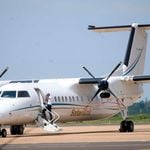
In the safari and regional aviation, Safarilink Aviation saw significant domestic growth, particularly in routes linking Nairobi with Mombasa and Kisumu.
Chief Executive Alex Avedi described the year as “spectacular”, noting they had traffic increases of more than 100 per cent on key routes and extraordinary uptake on coastal and leisure segments.
“There are lots and lots of people flying, and that’s really a good thing for domestic tourism, for domestic businesses.”
One of their most innovative moves was the codeshare partnership between KQ and Safarilink Aviation, which added nine safari destinations to Kenya Airways’ global itinerary. This deal allows travellers to book international flights and domestic safari connections on a single ticket, which makes the journey simple for inbound tourists and boosts Kenya’s tourism ecosystem.
The partnership links international connectivity with local distribution that allows KQ’s global customers to connect with Safarilink’s flights to Maasai Mara airstrips, Amboseli, Nanyuki, and Samburu.
When it comes to the safari’s growth, Mr Avedi says that their capacity additions are looking at an immediate focus. “Currently, we have four flights to Kisumu, and we know we can do up to six flights. We also recently introduced Mombasa, and we have only two flights a day; we’ll probably go up to three, but we know we can easily do eight to ten, just based on the demand that we see in the market.”
The coast offers them further opportunity. “We see a huge opportunity in the coastal routes also with Lamu and Malindi, which today we only go once a day, and it’s a shared service between Lamu and Malindi,” Mr Avedi said. “At some point, we need to delink the two services and have Lamu separate and Malindi separate.”