A regional competition watchdog wants airlines operating within the Common Market for Eastern and Southern Africa (Comesa) to compensate stranded passengers with cash payouts of up to $600 (Sh77,540) for flight cancellations and delays amid a surge in travellers’ complaints at Kenya Airways.
The Comesa Competition Commission has issued a notice, technically known as guidance letter, proposing that carriers offer stranded passengers between $250 (Sh32, 310) and $600 (Sh77, 540) for cancellations.
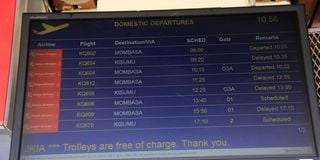
“The Guidance Letter sets standards for handling cancelled flights, overbooking, delays, lost or damaged baggage, reimbursement rights, re-routing options, and passenger compensation,” said the watchdog in the notice made public on Monday.
“Specifically, it proposes compensation amounts ranging from $250 to $600 depending on flight duration, with reductions allowed for timely re-routing. Compensation must be paid in the original form of purchase.”
This rules out offering compensation via vouchers. Guidance letters are often not legally binding.
Airlines already offer some level of customer service when they cause flight cancellations or severe delays, such as re-routing, conditioned vouchers, meals and accommodation.
The competition watchdog’s notice comes in the wake of increased consumer complaints relating to flight delays, overbooking, cancellations, and baggage issues.
Its review indicated that Kenya Airways has the highest complaints, followed by Ethiopian Airlines, Air Mauritius, and RwandAir.
This signals that Kenya Airways will bear the biggest brunt of the fines should airlines agree to the compensation plan. Airlines have a defence if they can show that a cancellation happened because of unavoidable extraordinary circumstances.
The proposed Comesa compensation plan would align Africa’s policy more closely with European airline consumer protections.
In the EU, passengers can claim compensation of between £220 and £520, depending on the distance for delays.
The compensation for delays in Europe kicks in if passengers arrive in their final destination after more than three hours.
In the US, the Trump administration said last month it was abandoning a Joe Biden-era plan that sought to require airlines to compensate stranded passengers with cash, lodging and meals for flight cancellations or changes caused by a carrier.
The Comesa watchdog reckons that in Africa, delayed flights are the most common complaints, followed by rescheduled flights, baggage problems and cancellations.
“Alarmingly, over 71 percent of affected passengers received no redress for cancellations or delays, and nearly 28 percent of those with baggage issues lacked access to claim information,” said the watchdog.
“Kenya Airways recorded the highest number of complaints, followed by Ethiopian Airlines, Air Mauritius, and RwandAir.”
Separate data from aviation analytics firm Cirium indicates Kenya Airways had the highest flight cancellations among top African and Middle Eastern carriers.
Kenya Airways cancelled 2,263 flights in the year to December compared to Ethiopian Airlines’ 1,622.
This is despite Ethiopia having had a total of 151,543 flights compared to KQ’s 46,578.
Emirates cancelled 836 flights while Air Seychelles had 1,624, according to Cirium—a leader in data and analytics for airlines and airports. Kenya Airways said yesterday that its legal team was reviewing the Comesa documents.
“I can confirm that we have received a statement of concern from Comesa, which our legal team is reviewing. We have had cordial engagements with Comesa on the statement of concern since December 2024 and have explained our position on the same,” Allan Kilavuka, the CEO of Kenya Airways, told the Business Daily via WhatsApp.
“This is an ongoing matter and we will continue pursuing it through the Comesa channels.”
In January, the competition watchdog opened a probe into flight delays at involving Kenya Airways in Nairobi and Kampala.
The notice followed complaints raised against Kenya Airways by passengers who cited delays of over six hours and denial of food and accommodation.
The watchdog also investigated Zambia Airways for flight delays and concluded a similar probe on Malawi Airways, where the airline was ordered to compensate the aggrieved passengers.
Among the issues that have been raised consumers, according to the commission, are refusal to compensate passengers for lost or damaged luggage, long delays in delivery of missing luggage, failure to refund cancelled tickets, and unexplained flight delays and cancellations.
On Kenya Airways, the Comesa competition watchdog reckoned that the carrier failed to offer redress and instead offered conditioned vouchers for the flight delays.
The passengers reported missing their connections from Nairobi to Lusaka and from Lusaka to Livingstone on Zambia Airways flight ZN419, both scheduled on the same day.
The passengers claimed to have spent over seven hours waiting for their rebooked connecting flight after arriving at the Jomo Kenyatta International Airport (JKIA) in Nairobi.
Another passenger raised a complaint with Comesa after the national carrier delayed the flight to Entebbe from Nairobi for over six hours without ample notice, while failing to provide accommodation and meals.
“The Commission’s preliminary assessment concluded that the failure by Kenya Airways to reconnect passengers, provide necessary support, and offer meaningful compensation instead of unfavourable vouchers may amount to unconscionable conduct,” the watchdog said in the notice released Monday
“Following a conclusion of the investigation, Kenya Airways was served with a Statement of Concern to which it has yet to conclude its responses.”
Kenya Airways has previously linked the delays to shortages of spare parts.
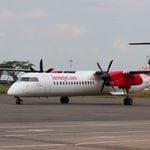
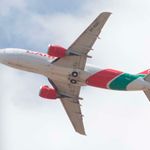
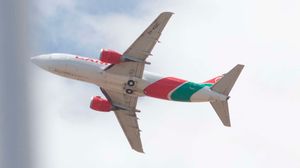
Kenya Airways, whose strategy hinges on connecting African travellers to the world and vice versa through its Nairobi hub, operates a fleet of Boeing and Embraer planes.
It flies in about 32 destinations in Africa, where it generated 47 percent of its Sh103.1 billion revenues in 2023.
The carrier, one of the biggest in Africa, said the worldwide shortage of parts, which is affecting the global supply chain, has grounded several planes and caused operational and financial difficulties.
It reported that 33 percent of its wide-bodied aircraft remained grounded for the first six months of the year.
Kenya Airways slumped back into the red following a Sh12.15 billion net loss in the first half of 2025, compared to a Sh513.0 million profit after tax reported in the same period last year.
The airline slumped back into the red following a Sh12.15 billion net loss in the first half of 2025, compared to a Sh513.0 million profit after tax reported in the same period last year.