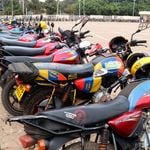
The number of new motorcycle registrations in the first 11 months of 2025 surpassed the total units registered in the full year in 2024, as easing credit terms and shifting consumption patterns lifted purchases.
Data from the Kenya National Bureau of Statistics (KNBS) shows that 145,714 new motorcycles were registered between January and November last year, more than double the 68,804 that were registered in the entire 2024.
The rebound marks a turnaround after a sustained three-year slump caused by rising taxes, higher fuel prices, and weak purchasing power.
Last year’s levels were last seen in 2021 when 262,624 motorcycles were registered during the first 11 months, before demand collapsed amid tightening fiscal and operating conditions.
Analysts say recovery has largely been driven by improved access to credit, easing interest rates, and renewed investment by operators in delivery services and ride-hailing platforms.
“On the macroeconomic front, the impact of lower interest rates is starting to be felt in the real economy. By the end of last year, growth of credit in the private sector had risen to 6.3 percent from a contraction of two percent at the beginning of last year. This could be allowing businesses to have a bit more funds to invest in working capital,” says Ken Gichinga, chief economist at Mentoria Economics.
“On the microeconomic front, there is a shift in consumption patterns. The convenience of online shopping is creating a big demand for delivery services. There has also been a rise in demand for ride-hailing services,” he adds.
The latest rally in motorcycle demand follows three years of steep declines that pushed motorcycle registrations to more than two-decade lows.
KNBS data shows newly registered motorcycles fell 4.69 percent to 72,868 units in the 2024 full year as demand weakened across both commercial and personal use segments.
Registrations had peaked at 291,553 between January and December 2021, before plunging by nearly three-quarters by the end of 2024. Demand for motorcycles had previously risen consistently from 2008 after the government waived import taxes, making boda boda transport one of the fastest-growing informal sectors.
Last year’s recovery occurred despite motorcycles continuing to face significant tax burdens that have raised acquisition costs for riders. Imported motorcycles attract a flat excise duty of Sh12,952 per unit, with fully built units also charged a higher import duty than locally assembled alternatives.
Completely knocked-down motorcycle parts attract a lower import duty of 10 percent, compared with 25 percent for fully built units, and are exempt from excise tax.
Local assemblers, including Toyota Kenya, Makindu Motors, and Honda Motorcycle Kenya, have benefited from these incentives, supporting factory jobs and auxiliary industries.
A proposal to introduce a 10 percent excise duty in the Finance Bill 2024 was rejected by lawmakers over concerns it would further raise costs in a sector employing millions.