Safaricom plans to roll out tokenised Wi-Fi within the next month, introducing pay-as-you-go broadband options as the telco seeks to expand fixed internet access beyond higher-income households and businesses.
The service will offer hourly, daily and weekly access options, similar to the pay-as-you-go model that has long underpinned mobile data bundle uptake in Kenya.
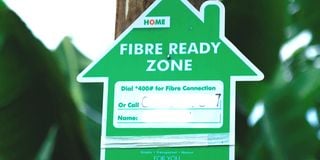
Safaricom plans to roll out the offering in Kenya and Ethiopia, giving customers who do not want to commit to monthly plans Wi-Fi access for short periods.
“We are planning to introduce tokenised Wi-Fi late this month or in early February,” a Safaricom official told the Business Daily by phone.
“We are target customers who need heavy browsing for a short time and for whom paying for Wi-Fi for only that duration gives them more freedom and convenience than having to pay for the entire month.”
The official could not comment on whether the tokenised Wi-Fi packages will come with fixed data allocations or offer unlimited access at different speed tiers.
Internet pricing
Safaricom is Kenya’s largest telco, controlling the country’s mobile broadband and fixed internet markets. The company believes the model will offer more flexibility to customers while also lowering the cost of serving low-income segments.
Safaricom’s CEO, Peter Ndegwa, last month said that by adjusting internet pricing, identifying high-demand locations and tiering its offerings, the company can expand broadband participation and reach millions of new users currently priced out of traditional fixed internet plans.
“Instead of having only monthly plans, you can have daily, hourly, weekly, or monthly. We believe that by changing the way we go to market, by identifying locations based on the needs of the customer,” he said in a video published by the telco on YouTube.
“By tiering pricing, we can deliver propositions that expand participation and that will also reduce cost to serve, to allow us reach the extra three million customers [not served by the broadband market].”
Mr Ndegwa said fixed broadband represents one of the biggest growth opportunities for the telco in both Kenya and Ethiopia, where it entered in 2022. State-backed Ethio Telecom still controls the mobile and internet market there.
Safaricom currently has just over 400,000 fixed broadband customers, against an estimated Kenyan market potential of about four million connections, Mr Ndegwa said. The wider market is currently serving about 1.2 million users, leaving room for an additional three million customers.
“This area can grow 50 percent every year for the next five years without exhausting the opportunity,” he said.
Safaricom’s strategy, he added, combines fibre rollout, fixed wireless access using 5G and more affordable devices. He said the company had historically focused on premium customers and higher-income neighbourhoods, but would begin targeting lower-income segments from the second half of the year by changing how it prices and distributes broadband services.
Last month, the company introduced a Sh800 monthly home fibre plan designed for households with irregular incomes.
Communications Authority of Kenya (CA) data shows that Safaricom maintained a lead in Kenya’s fixed data subscriptions market, with a share of 35.6 percent as of September 2025. Jamii Telecommunications and Wananchi Group Limited were second and third, with market shares of 20.4 percent and 11.8 percent, respectively.
In mobile broadband, Safaricom led with a 62.7 percent share, followed by rival Airtel at 33.5 percent. Telkom had a 1.2 percent share.
Safaricom has been aggressively pursuing a larger share of the data business, ramping up investment in 4G and 5G networks to offset a decline in mobile calls. As per its 2026 half-year financial results, mobile data overtook voice revenue for the first time in the six months to September 2025.
During this period, the number of mobile subscribers connected to the 5G network grew 19.96 percent to 1.5 million, up from 1.2 million in the quarter ended June 2025.
4G remains the most widely used technology, growing 7.5 percent during the review period to 39.98 million users from 37.2 million in June, as consumers continue to upgrade from 3G and 2G networks. Subscriptions on 3G networks fell 22.8 percent to 5.7 million, while 2G users grew marginally by 2.5 percent to 13.1 million.