Time flies with great content! Renew in to keep enjoying all our premium content.
Prime
Comesa watchdog warns consumers of rip-offs ahead of festive season
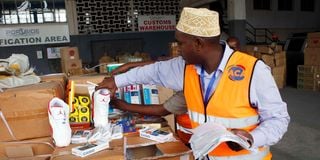
Anti-Counterfeit Agency Coast regional boss Mr Yusuf Osman showing journalists some of the goods they impounded as counterfeit at one of the Mombasa Container Freight Station (CFS) on June 19, 2018.
The Common Market for Eastern and Southern Africa (Comesa) Competition Commission has warned consumers of misleading discounts, counterfeit goods and online scams as the festive shopping season nears.
The regional competition watchdog said some retailers across the bloc's 21 member-states, including Kenya, inflate prices only to advertise exaggerated discounts.
Others exploit the shopping frenzy to dump fake, unsafe, expired or nearly expired products on unsuspecting consumers, it warned.
The commission also flagged restrictive return policies that leave customers “stuck” with defective items, as well as an uptick in phishing, fake e-commerce websites and fraudulent online adverts designed to steal personal and financial information.
Comesa is urging shoppers to verify product quality by reading descriptions and safety labels carefully, and to buy only from trusted retailers or official websites to avoid falling prey to deceptive practices.
“Compare prices across multiple platforms to confirm authenticity of the advertised discounts, compare prices on display with the offered discounts and actual prices charged at the counter,” the commission’s director of consumer welfare and advocacy, Steven Kamukama, said in a statement.
Consumers are also advised to be wary of counterfeit goods sold at extremely low prices.
Retailers behind misleading or exploitative festive season tactics violate Articles 27 and 28 of the Comesa Competition Regulations, which prohibit false or deceptive representations and unconscionable conduct toward consumers.
“Any person who has been affected by any of the above conduct, or who has observed such conduct being carried out in the common market, should report the matter to the commission by contacting the undersigned or to the national authorities responsible for consumer protection,” Mr Kamukama said.
Comesa’s competition watchdog works with national consumer protection agencies and organisations such as the Competition Authority of Kenya (CAK) and the Consumers Federation of Kenya (Cofek) to safeguard consumers from unfair business practices.
The Commission can receive complaints from individuals, organisations, or national authorities, and may also open investigations on its own initiative based on market surveillance.
Under the regional bloc’s competition regulations, businesses are prohibited from making false or misleading claims when promoting or supplying goods and services.
This includes misrepresenting the quality, value, origin, composition, price, or condition of products, as well as falsely claiming that items are new or endorsed by particular individuals or organisations.
Companies are also barred from suggesting that certain customers have agreed to a purchase when they have not, or implying that goods or services carry benefits, sponsorships or guarantees that do not exist.
“… making a false or misleading representation concerning the availability of facilities for the repair of goods or of spare parts for goods,” the regulations state. Any misleading claim about contractual terms, warranties, rights or remedies is similarly prohibited.
If a business is found to have breached the regulations, the watchdog can order the termination of harmful conduct, direct it to cease and remedy the effects of its actions, and require compensation for affected consumers.
The commission can also impose fines of up to 10 percent of the company’s annual turnover generated within the Comesa market.