Current account deficit widens to 2.1pc on increased imports

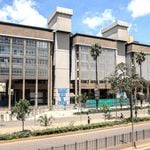
The Central Bank of Kenya(CBK) Governor Dr Kamau Thugge during an interview at his office along Haile Selassie Avenue, Nairobi on June 21, 2024.

Photo credit: File | Nation Media Group

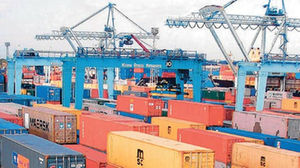
Increased importation of capital goods, including machinery and transport kits, pushed Kenya’s current account deficit to 2.1 percent of GDP at end of August 2025, compared to 1.6 percent a year earlier, indicating rising business activity and improving credit flows to the private sector.

The Central Bank of Kenya (CBK) says deficit widened to $2.84 billion (Sh367 billion) in August from $1.82 billion (Sh235 billion) a year earlier, but it is expected to moderate to $2.39 billion (Sh309 billion) or 1.7 percent of GDP by the end of the year.

The current account represents the balance of trade on goods and services—exports and imports, remittances, and tourism earnings.

When in deficit, it shows that forex outflows from the country exceeded inflows, which, in Kenya’s case, reflects the fact that the country is a net importer of goods.

The rise reflects the fact that import outflows rose at a faster pace than exports and other inflows into the country.

CBK data shows that in the 12 months to August 2025, Kenya’s import bill grew by 9.2 percent to $23.57 billion (Sh3.05 trillion), while export earnings jumped by 3.6 percent to $12.64 billion (Sh1.63 trillion) in the period.

“The expansion of the current account deficit mainly reflects imports of intermediate and capital goods. However, it is expected to stabilise between 2025 and 2026 at 1.7 percent and 1.8 percent of GDP, respectively,” said CBK Governor Kamau Thugge on Wednesday in a briefing on the monetary policy committee meeting.

Other components of the current account have continued to show positive momentum as well. These include diaspora remittances, which grew by 9.4 percent to $5.08 billion (Sh656.5 billion) in the 12 months to August, and services exports, which expanded by 10.6 percent to $8.22 billion (Sh1.06 trillion) in this period.

The CBK earlier revised the 2024 current account deficit from four percent of GDP to 1.3 percent after new data uncovered higher export receipts than previously estimated. The higher value was mainly due to improved capturing of data related to fuel re-exports, travel, and financial services.

The current account is the biggest component in the overall balance of payments, which is a measure of the total economic or monetary transactions of the economy with the rest of the world.

The other segments of the balance of payments are the capital account, which measures major capital movements including foreign direct investment and foreign loans, and the financial account, which measures portfolio inflows into the stock and bonds markets.

The relatively low current account deficit, coupled with capital inflows, is expected to yield an overall balance of payments (BOP) surplus of $674 million (Sh87 billion), which will help the CBK add to its forex reserves, which currently stand at $10.77 billion (Sh1.4 trillion).

Dr Thugge, however, warned that potential external shocks continue to present a risk to the positive outlook on the overall balance of payments.

“The downside risks to the balance of payments outlook include a worsening of geopolitical conflicts, which may create commodity price disruptions, persistent and elevated trade policy uncertainty impacting export-intensive industries, and volatility in the international oil markets,” said Dr Thugge.

In 2024, the BOP surplus stood at $1.46 billion (Sh188.7 billion), given that combined capital and financial account inflows of $3 billion (Sh388 billion)—partly supported by concessional loans by the World Bank and IMF— were enough to cover the current account deficit of $1.55 billion (Sh200.3 billion).

PAYE Tax Calculator

Note: The results are not exact but very close to the actual.