Developers of Kenya’s first PPP power lines seek Sh34bn from banks

Ketraco is betting on PPP deals to bridge a financing gap of more than $4 billion (Sh516.8 billion) to upgrade the power transmission network over the next 20 years.

Photo credit: Shutterstock

The developers of Kenya’s first public-private partnership (PPP)-funded power lines have approached three banks, including the African Development Bank (AfDB), for loans of up to Sh34 billion to finance the project.

Disclosures by the Kenya Electricity Transmission Company Limited (Ketraco) and the PPP Directorate show that the other two lenders approached to provide the loans are the Trade Development Bank (TDB) and the Dutch Entrepreneurial Bank (FMO).
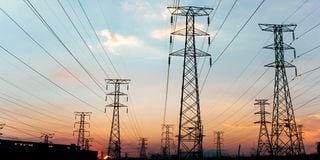
The total project cost for the two power lines and substations is $341 million (Sh44.05 billion), with the developers covering the remaining costs.

Africa50, the AfDB's pan-African infrastructure financing arm, and PowerGrid Corporation of India will construct the 400 kilovolts (kV) Lessos−Loosuk line and the 220kV Kisumu –Kibos–Kakamega−Musaga line.

The project will be funded via a mix of debt and equity in a 77:23 ratio. Africa50 will provide 60 percent of the equity or Sh6.08 billion ($47.06 million) with the PowerGrid Corporation of India providing the remaining 40 percent.

The loans will provide slightly more than three-quarters of the funds needed to finance the construction of the two lines and related substations.

“Indicative term sheets for the project were also provided. The term sheets indicate negotiated positions with following senior lenders, African Development Bank, FMO Entrepreneurial Bank and Trade & Development Bank,” the due diligence report on Africa50 and PowerGrid Corporation of India reads.

“This demonstrates confidence by the senior lenders on the proponents and indicates intent to provide the debt component thus achieving financial close.”

Consumers will pay a special tariff on their monthly power bills, allowing the banks and developers to recoup their investment over a period of 30 years, after which the project will be handed over to Kenya.

The two lines and substations are crucial for improving power supply in western Kenya and providing alternative routes for evacuating wind and solar power from northern Kenya.

Earlier this month, the Energy and Petroleum Regulatory (Epra) undertook public participation on the project, with the proposed tariff one of the key issues that were discussed.

This will be the first energy project in Kenya to be funded via the PPP, given that an earlier deal awarded to the Adani Group of India was verbally cancelled in November last year.

Adani Energy Solutions, a subsidiary of Adani Group, had been awarded the deal to build 400 kV Gilgil-Thika-Malaa-Konza, 220kV Rongai-Keringet-Chemosit and the 132kV Menengai-Olkalou-Rumuruti lines.

The Indian firm was also set to build a 400/220 kV substation at Lessos and Rongai 132/33kV Thurdibuoro substations in Kisumu.

But President William Ruto was forced to cancel the deal after Gautam Adani, the founder of the Indian conglomerate was indicted in the US for allegedly orchestrating a $250 million bribery scheme.

Ketraco is betting on PPP deals to bridge a financing gap of more than $4 billion (Sh516.8 billion) to upgrade the power transmission network over the next 20 years.

The company has recently invited consultants to undertake feasibility studies for a $245.93 million (Sh31.8 billion) project to build four power transmission lines via the PPP model.

These are the 132 kV Kipevu-Mbaraki, the 220 kV Kiambere-Maua-Isiolo, 220kV Kwale - Shimoni (Kibuyuni) and the 132kV Meru-Maua.

PAYE Tax Calculator

Note: The results are not exact but very close to the actual.