Eight State agencies to spend Sh2.5bn on vehicles

Heavy spending on the purchase of vehicles has been a growing problem in the public service, with a policy on government transport developed last year citing a growth in the number of offices and officials entitled to government vehicles among the main reasons.

Photo credit: Shutterstock

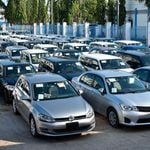
A small group of eight State entities will spend more than half of the Sh4.6 billion set aside by the government for the purchase of vehicles for 189 public agencies, revealing a continued heavy spending on cars amid pressure to cut purchases for leasing.

The eight State departments and agencies plan to splash Sh2.5 billion on vehicles and accessories during the year ending June 2026, new disclosures on procurement plans for the year have disclosed.
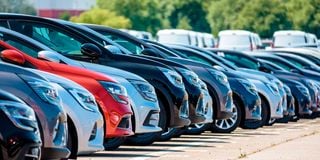
The planned budget by the eight agencies can buy 1,253 vehicles worth Sh2 million each.

The State Department for Blue Economy and Fisheries tops with a planned spending of Sh638.7 million on vehicles, which constitutes 7.8 percent of its annual budget of Sh8.2 billion.

It is followed by the State Department for Agriculture, which plans to spend Sh464.8 million, the Kenya Airports Authority (Sh406.9 million), the State Department for Medical Services (Sh318 million), and the Kenya Electricity Generating Company (Sh252.5 million), they revealed in their procurement plans.

Further disclosures show that the Agriculture and Food Authority will spend Sh150 million on vehicles, the Rural Electrification and Renewable Energy Corporation (Sh139 million), and the National Assembly (Sh137 million), closing the list of eight agencies that will spend more than Sh100 million each on vehicles.

At least 298 agencies across national and county governments had uploaded their procurement plans for different goods and services on the electronic government procurement (e-GP) portal by on Wednesday.

The 196 agencies that will spend Sh4.69 billion on vehicles constitute a quarter of the nearly 800 agencies across national and county governments, implying that the budget on vehicles is expected to shoot higher as more entities upload their plans.

Heavy spending on the purchase of vehicles has been a growing problem in the public service, with a policy on government transport developed last year citing a growth in the number of offices and officials entitled to government vehicles among the main reasons.

The draft government transport policy, 2024, says spending on government transport has increased from Sh8.6 billion in 2021 to Sh14.3 billion in 2023, partly due to growing vehicle purchases.

“Apart from the inefficiencies in executing fleet operations, other key factors informing the historical rising trend in the costs include rising global fuel costs, and the increasing number of officials entitled to government transport due to operationalisation of the devolved system of governance and creation of more executive offices,” the draft policy says.

The draft policy proposes a wider adoption of the leasing model for government transport operations to ease the strain on heavy expenditures.

Institutions in the security sector have been leaders in the adoption of the leasing model for their vehicles, a factor that Treasury acknowledges has lowered costs.

During the current fiscal year, the State Department for Internal Security plans to spend Sh16.5 million on vehicles and accessories, and the National Police Service plans to spend Sh11.8 million.

The draft government transport policy also reckons that there has been an uncoordinated procurement of new vehicles, huge vehicle maintenance and overhaul expenses affecting government transport, even as old vehicles are abandoned and grounded due to red tape involved in their disposal and repair.

Treasury proposed the policy to address weaknesses in the management of the government fleet, to apply to the national and county governments.

“In a number of cases, some assets overstay in the garages while others are poorly repaired due to inadequate supervision, leading to vandalism and financial loss. In some instances, vandalism is occasioned by GoK staff and garage owners,” Treasury says in the draft policy.

It also addresses cases of State officers riding in huge convoys that cost taxpayers heavily, limiting Cabinet Secretaries (CSs) to two vehicles and one vehicle to Principal Secretaries (PSs) and heads of parastatals, with lower cadres planned to be facilitated from a pool of vehicles.

“Senior cadre officers shall be facilitated from a pool of vehicles. Commissioners of independent offices and members of parastatal boards are required to use private vehicles and seek reimbursement,” the draft policy proposes.

At the county level, it also proposes that governors be allocated two vehicles only, as their deputies and County Executive Members get one each.

PAYE Tax Calculator

Note: The results are not exact but very close to the actual.