Kenya loans from World Bank fund dip to 4-year low low-interest

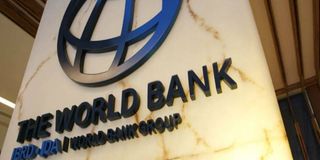
Signage of the World Bank.  

Photo credit: File | Pool

The value of loans tapped by Kenya from the World Bank’s concessional International Development Association (IDA) fund dipped to a four-year low in the 12 months to June 2024, new disclosures showed, pushing the country down two places to the sixth-largest borrower for the period.

The IDA provides interest-free loans and grants to governments in the world's poorest countries. IDA's lending terms are concessional, meaning that credits have low or zero interest charges and repayments are spread out over 30 to 40 years.
Latest data from the World Bank shows that Kenya tapped $1.7 billion (Sh219.7 billion at current conversion rates) during the period compared to a high of $2.01 billion (Sh259.8 billion) tapped in the previous fiscal year when the country stood as the fourth-largest borrower.

The latest borrowing breaks a three-year trend of increased utilisation of the kitty which commenced in the year ending June 2020 when Kenya tapped $943 million (Sh121.9 billion), before upscaling to $1.8 billion (Sh232.7 billion) which was sustained in the succeeding two years.

During the year under review, Ethiopia was the highest user of the kitty tapping $3.39 billion (Sh438.2 billion), followed by Bangladesh which borrowed $3.36 billion (Sh434.3 billion) while Nigeria, Pakistan, and Tanzania utilised $2.2 billion (Sh284.4 billion), $2.1 billion (Sh271.4 billion) and $1.8 billion (Sh232.7 billion), respectively.

Established in 1960, the IDA fund aims at reducing poverty by providing highly concessional or interest-free loans and grants for programmes that boost economic growth, reduce inequalities and improve people’s living conditions.

The funding is allocated to the recipient countries in relation to their income levels and record of success in managing their economies and their ongoing IDA projects.

According to the World Bank, IDA is primarily funded by contributions from high- and middle-income partner countries, transfers from other Bank Group institutions, borrowers’ repayments of earlier IDA credits as well as funding raised from the capital markets.

“IDA’s financial strength is based on its robust capital position and shareholder support, as well as prudent financial policies and practices, including a capital adequacy framework,” notes the Bretton Woods institution.

“IDA uses this funding to support an ambitious policy package with special areas of focus and cross-cutting issues for each replenishment cycle.”

For a country to access IDA funding, it must be in a situation of relative poverty as indicated by its per capita income falling below the IDA operational cut-off of $1,315 (Sh169,987.59) and lack of creditworthiness for IBRD (International Bank for Reconstruction and Development) borrowing.

The African continent represents the largest benefactor of IDA resources and represents in excess of 70 percent of the programme’s global commitments.

In Eastern and Southern Africa, the IDA notes that it has helped deliver essential health, nutrition, and population services to over 90 million people while impacting over 50 million persons in Western and Central Africa with social protection programmes.

PAYE Tax Calculator

Note: The results are not exact but very close to the actual.