Time flies with great content! Renew in to keep enjoying all our premium content.
Prime
Kenya’s debt servicing costs hit Sh942bn in first half
Kenya has, in recent years, relied heavily on borrowing to plug persistent budget deficits, driven by ambitious infrastructure programmes and recurrent expenditure pressures.
Kenya’s debt servicing costs jumped 44.1 percent in the first half of the current financial year, increasing pressure on public finances as repayments consumed more than 80 percent of all taxes collected over the period, new National Treasury data shows.
The government spent Sh941.6 billion servicing public debt in the six months ended December 2025, up from Sh653.5 billion over a similar period the previous year, marking a Sh288.1 billion increase.
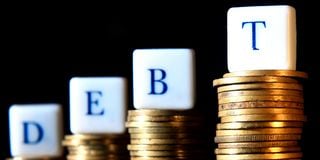
The rise pushed debt service costs to 81.1 percent of total tax revenues, following a Sh1.161 trillion collection by the Kenya Revenue Authority (KRA) during the period. This compares with a debt service ratio of 60.8 percent a year earlier, when Sh653.5 billion was spent against tax receipts of Sh1.074 trillion.
The growth in debt service costs leaves the exchequer with limited room to fund development spending and other essential public services.
The pressure is further compounded by weak revenue performance, with data showing that the KRA missed its half-year tax collection target by Sh152.2 billion. Against a Sh1.314 trillion target, it managed to collect Sh1.161 trillion.
The elevated half-year debt repayment costs comprise a record Sh509.6 billion paid out to service public debt during the first quarter of the fiscal year, which marked the highest ever recorded in a similar three-month period.
The repayment pressure comes against the backdrop of an expanding debt burden, with the public debt stock standing at Sh12.3 trillion as of November last year.
Kenya has, in recent years, relied heavily on borrowing to plug persistent budget deficits, driven by ambitious infrastructure programmes and recurrent expenditure pressures.
The growing debt service burden continues to crowd out project funding, with a development expenditure of Sh145.04 billion in the six months to December, accounting for just 15.4 percent of total debt servicing costs during the period.
The difficulty in expanding revenue collection has also constrained the government’s ability to scale up spending on priority areas such as health and education, even as demand for public services continues to rise due to population growth.
Public debt payments are among the first charges on the Consolidated Fund, meaning they must be settled before other categories of expenditure are financed.
The government is betting on the sale of several State-owned enterprises to raise funds for infrastructure and general budgetary spending.
The Treasury has opened the sale of a 65 percent stake in Kenya Pipeline Company (KPC) to the public in a bid to raise Sh106.3 billion.
The Treasury has also signed an agreement to sell a 15 percent stake in Safaricom to Vodacom Group for Sh204.3 billion. It will, in addition, receive a separate Sh40.2 billion representing an upfront payment of dividends that will accrue on its residual 20 percent stake in Safaricom.