KRA catches 392,162 in tax evasion crackdown

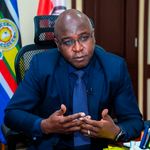
George Obell during a past interview. He has been apointed as KRA'S Commissioner for the Micro and Small Taxpayers Department (MST).

Photo credit: File | Nation Media Group

Kenya Revenue Authority (KRA) detectives have identified 392,162 firms and wealthy individuals that owe it Sh759.7 billion, setting the stage for travel bans, asset freeze and deactivation of Personal Identification Numbers (PINs).

The taxman unearthed the alleged tax cheats and dodgers in the wake of an audit of the withholding tax registry, which revealed that the self-declared income was substantially lower than the amounts reported by third parties paying for the taxpayers’ services.
In some instances, the taxpayers declared nil returns despite the firms they did business with declaring payments to them.

Under withholding tax rules, firms paying for services like consultancy withhold and remit part of the taxes to the KRA in every paycheque, with the taxpayers expected to pay the full duty at a later date.

The KRA reckons it is not receiving the full taxes from suppliers despite firms declaring higher payments to the contractors.

The agency kicked off an income and expenditure verification on January 1 in an audit that pulls data from multiple sources, including eTIMS invoices, withholding tax certificates and import documents, to verify the self-declaration figures provided by a taxpayer when filing returns.

The taxman says earnings in the gig economy and fees paid to consultants, managers, trainers, lawyers and auditors top the list of hidden self-declared pay.

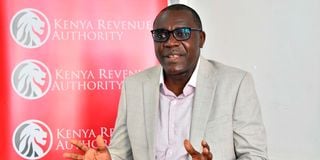
“Taxpayers who had taxes withheld from them yet in 2024 they filed Nil returns are 392,162. When we check the system, we can see that these taxpayers still had transactions in 2024, yet they filed nil returns,” said George Obell, the Commissioner for Micro and Small Taxpayers.

“There’s a mistaken notion in the market that if you pay 5.0 percent or 3.0 percent on your income, it is final. That is not correct, it is an advance tax,” he added.

Withholding tax rates vary from 3.0 percent to 25 percent depending on the nature of the transaction and residency status.

Taxpayers are expected to pay the full tax after deducting business expenses.

There are a few instances where withholding tax is a final tax, notably on betting winnings, interest income from investments like bonds and dividends

The KRA has started making entries of the due taxes on the firms and individual tax records, with taxpayers expected to settle the unpaid duty ahead of filing their returns before the June deadline.

“We expect that there are many taxpayers who will see the income prepopulated on their returns and come forward to engage us,” said Mr Obell.

“We will also communicate to the taxpayers who will choose, despite having been shown income on their prepopulated returns, not to come forward and engage the Authority.”

This sets the stage for a crackdown triggered by the Treasury’s desire to bolster revenues to compensate for the lack of new or higher taxes in the Finance Bills in the two previous fiscal years and repair State coffers.

The government plans to increase tax collection and cut debt after years of ramped-up borrowing to build infrastructure.

With opposition to new and higher taxes, the KRA is racing to bring more people into the tax bracket and curb cheats and dodgers in the quest to meet revenue targets.

“We are now making a serious and unprecedented effort around having visibility of transactions in the economy,” said Mr Obell.

“The information that is hitting our system through eTIMS tells us who is transacting, whom they are transacting with and how much they are transacting.”

The 392,162 individuals and companies account for 5.6 percent of the nearly seven million active taxpayers.

The alleged tax cheats that fail to play ball risk receiving travel bans, collection duty directly from their suppliers and bankers, as well as prosecution in what promises to be the biggest crackdown on high net-worth persons.

Self-employed professionals like doctors and lawyers as well as wealthy individuals and real estate investors will be in the crosshairs of the taxman.

The KRA has previously flagged firms in the construction, importation of hardware and household goods, scrap metal dealers and importers of electronic items, including mobile phones for under-declaring tax dues.

Wealthy individuals, have been hiding their sources of income while engaging in luxury spending and accumulation of property, including the purchase of homes and high-end cars.

Self-employed professionals have also been fingered for either evading or under-declaring their tax obligations.

The KRA enforcement unit has also been using various databases to pursue suspected tax cheats, among them bank statements, import records, motor vehicle registration details, Kenya Power records, water bills and data from the Kenya Civil Aviation Authority (KCCA), which reveals individuals who own assets such as helicopters.

Car registration details are also being used to smoke out individuals who are driving high-end vehicles but have little to show in terms of taxes remitted.

Kenya Power meter registrations are helping the taxman to identify landlords, some of whom have been slapped with huge tax demands.

“In our current environment, there are many pieces of data that we are now putting together and that is helping us make an income estimation of someone who is transacting in the economy,” Mr Obell said.

Follow our WhatsApp channel for the latest business and markets updates.

PAYE Tax Calculator

Note: The results are not exact but very close to the actual.