State-controlled National Social Security Fund (NSSF) will take a Sh9.59 billion stake in the 236-kilometre Nairobi-Rironi toll road that has been split between two Chinese firms.
The NSSF is participating in the Sh170 billion public private partnership (PPP) project through a consortium with China Road and Bridge Corporation (CRBC) on an ownership split of 40 percent and 60 percent.
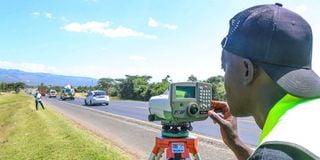
CRBC and the pension fund will invest $743 million (Sh95.86 billion) in their section of the highway that comprises the 81 kilometres stretch between Rironi and Gilgil, and the separate 58-kilometre Rironi-Maai Mahiu-Naivasha section that is known as A8 South.
They will fund their investment through a 25 percent equity injection of $185.75 million (Sh23.97 billion) and debt of $557.25 million (Sh71.89 billion), with the NSSF contributing 40 percent of the equity component.
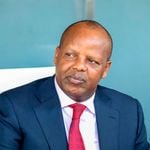
“We are only contributing equity. The Chinese partner will go and borrow the 75 percent debt component at low interest rates and bring it to the road,” said NSSF general manager for finance and investments Ronald Nyamosi last week.
“On this particular investment, we are targeting between 13 and 15 percent in dollar terms, which when converted to Kenya shillings could rise to 18 percent—which will be there for 28 years.”
The NSSF had initially projected an equity investment of between Sh20 billion and Sh25 billion when its consortium was initially awarded the contract for the entire road project, but has now had to halve the expected outlay due to the split.
The investment marks the first time the NSSF will put money in a public road project as the fund continues to diversify its earnings from bonds and listed equities, which account for 85 percent of its Sh558.1 billion investment assets.
The government brought back the losing bidder Shandong Hi-Speed Road and Bridge International Engineering (SDRBI) of China to avoid scrutiny and lengthy approval from the Chinese government due to the large size of the contract.
SDRBI will now construct the 94-kilometre Gilgil-Mau Summit section of the highway, which also includes a viaduct through Nakuru City.
Beijing usually demands approval for overseas projects exceeding $1 billion (Sh129 billion) that are handled by State-owned Chinese firms.
This rule would have likely subjected the Kenyan highway project to a lengthy delay of more than a year awaiting approval, hence the decision to split it into two sections each valued at less than the $1 billion threshold.
President William Ruto is keen to see the project completed before the next General Election in 2027, viewing it as a key selling point to residents of the Rift Valley, western Kenya and Nyanza, where motorists often endure long traffic snarl-ups, especially during the festive season. The project was launched on November 28, 2025.
President Ruto receives a panda plate from China Communications Construction Company President Zhang Bingman at State House, Nairobi.
Photo credit: PCS
The road is expected to significantly reduce travel time and ease congestion on the main artery from Nairobi to western Kenya, Uganda, Rwanda and the Democratic Republic of Congo (DRC).
An estimated 40,000 vehicles use the Rironi-Mau Summit road daily and are expected to become paying customers once tolling starts.
The Jubilee administration under Retired President Uhuru Kenyatta Kenya had awarded the contract for the construction of the highway to a different consortium led by French firm Vinci SA for 1.3 billion euro (Sh197.9 billion), but the deal was cancelled by his successor and tendered afresh, bringing in the two Chinese firms.
The Ruto administration sought to revisit the terms of the agreement, which the Kenya National Highways Authority (KeNHA) said put the risk from insufficient traffic demand on the government.
According to the government, the new contracts awarded to CRBC and SDRBI have no minimum revenue guarantees, which would require the exchequer to compensate the operators if toll collections fall below an agreed level –effectively insulating the project from demand risk.
Instead, the government has written in a clause known as a revenue cap agreement that will see the toll road operators share with the State any revenues generated beyond an agreed threshold, effectively limiting their potential for excessive profits during the concession period.
The revenue cap model, in contrast, allows taxpayers to benefit only from excess collections beyond the agreed threshold, without bearing the risk of underperformance.
The arrangement will also allow for part of the tolls to be reinvested in the maintenance and upgrading of the highway, while also giving the State a chance to earn from the project’s proceeds during the concession period.
This arrangement departs from the demand-risk model used for the 27.1 kilometre Nairobi Expressway, where the Chinese operator (CRBC) absorbs losses if traffic volumes fall short of projections, but retains all excess revenue when usage exceeds expectations. The Nairobi Expressway has, however, not earned a profit since its launch, with operational costs exceeding toll revenue.
Its net loss stood at Sh1.84 billion in the six months to December 2024, as per latest financial disclosures on the road.