Petrol price rises by Sh8.99 a litre on Israel-Iran war

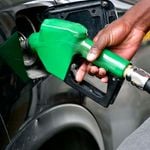
A fuel attendant fills up a vehicle at a petrol station. 

Photo credit: File | Nation Media Group

Petrol and diesel prices have jumped by over Sh8.50 per litre in the wake of last months Israel-Iran war, marking the biggest surge in nearly two years in what looks set to pile pressure on inflation.

A litre of petrol rose by Sh8.99 to Sh186.31 in Nairobi while diesel is up Sh8.67 to Sh171.58 as Kerosene jumps Sh9.65 to Sh156.58 a litre.

This the highest jump since September 2023 when a litre of diesel increased by Sh21.32 to Sh200.99 as petrol increased Sh16.96 to Sh211.64.

Fuel prices and shipment costs went up last month in following the 12-day Iran-Israel war, which threatened supplies from a region that accounts for nearly a third of global supplies.

Costly fuel is set to trigger public outrage as homes and businesses in an economic setting where salary rises after failed to compensate for the cost of living measure, which remained unchanged at 3.8 percent last month from 4.1 percent in April.

Fuel prices make a big contribution to inflation as Kenya relies heavily on diesel for transport, power generation and agriculture, while kerosene is used in many households for cooking and lighting.

 Fuel prices rose globally last month in the wake of attacks by the US and Israel on Iran. Prices of Brent crude – the global benchmark for oil prices— hit a five-month high of $81.40 following the attacks on Iran’s nuclear sites. 

The prices have since eased to $70 per barrel as of yesterday after the uneasy ceasefire.

Iran had last month mulled closing the Strait of Hormuz in retaliation to the attacks.

Around 20 percent of the world's oil passes through the Strait of Hormuz, with major oil and gas producers in the Middle East using the waterway to transport energy from the region.

Any attempt to disrupt operations in the Strait could send global oil prices skyrocketing.

Energy Cabinet Secretary Opiyo Wandayi last month cautioned that Kenyans would be hit if the Iran-Israel conflict escalates, adding that the government-backed deal on fuel importation only cushions Kenyans against shortages.

“The freight and premium for the G-to-G is fixed and any spikes in global freights and premiums due to the escalating geopolitics will not affect us. However, the escalating tensions may cause an increase in the Free on Board cost, which will affect our prices just like other parts of the world,” Mr Wandayi said in the earlier interview.

Saudi Aramco, Abu Dhabi National Oil Company and Emirates National Oil Company have since April 2023 been supplying Kenya with refined fuel on a credit window of 180 days. The deal was set to expire last year but was extended to March 2028.

PAYE Tax Calculator

Note: The results are not exact but very close to the actual.