Dumping of plastic carrier bags remains the most prevalent environmental offence reported to regulators, highlighting persistent compliance gaps that continue to raise environmental, social, and governance (ESG) risks for manufacturers, retailers, and logistics firms.
The government of Kenya banned the manufacture, importation, and use of plastic carrier bags and flat bags on March 14, 2017. The enforcement of the ban started in September the same year.
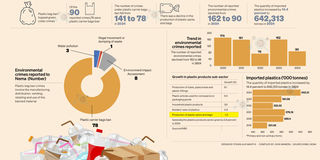
However, an analysis of data from the 2025 Economic Survey shows plastic-related offences accounted for 78 reported cases, far exceeding other categories such as environmental impact assessment (EIA) breaches (eight cases), water pollution (three cases), and illegal movement or dumping of waste (one case).
The offences cut across the manufacturing, importation, distribution, and retail segments, underscoring weaknesses in supply-chain controls at a time when regulators and financiers are tightening sustainability standards.
Despite bans on plastic carrier bags in Kenya, smuggling through porous borders is still prevalent. This exposes the country's plastic policy gaps, such as limited scope of county-level enforcement, exemptions for industrial packaging, limited focus on entire plastic value chain, and slow uptake of circular economy practices.
Although plastic-related offences remained elevated, the survey revealed that the total number of environmental crimes reported fell to 90 in 2024, down from 162 in 2023, a 44 per cent decline.
Also, the number of reported Environmental Impact Assessments declined from 10 in 2023 to 8 in 2024, while those involving water pollution fell from 10 to 3 in 2024.
“The general decline in Environmental crimes in 2024 is attributed to enhanced enforcement by Nema environmental inspectors as well as police officers attached to Nema Police Unit”, notes the Survey.
Experts caution that the decline may reflect enforcement variability rather than a structural reduction in environmental risk.
The data comes as Kenyan lenders expand green and sustainability-linked financing, with environmental compliance increasingly influencing credit pricing and access to capital.
Manufacturers and consumer goods firms remain most exposed, analysts say, as packaging choices and waste management practices are now routinely screened in ESG assessments.
While reported cases of water pollution and illegal dumping remain low, analysts warn that such offences are typically under-reported due to higher detection and investigation costs.
Regulators are expected to broaden enforcement as Kenya aligns environmental regulation with climate commitments and sustainable finance frameworks.
For businesses, the signal is clear: regulatory exposure is shifting from isolated compliance breaches to broader ESG risk that can affect valuations, financing, and market access.