Relief for companies as loan rates tied to Treasury bills fall

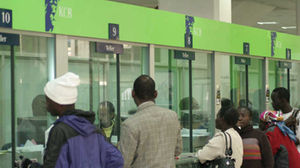
The Central Bank Of Kenya.

Photo credit: File | Nation

Companies, including East African Breweries Plc (EABL) and Crown Paints, are looking at lower financing costs on loans whose charges are pegged to government benchmark rates following the recent fall in domestic Treasury bill rates and the decision by the US Federal Reserve to resume its base rate cuts from this month.

Treasury bill rates have halved from a range of 15.8 to 16.9 percent a year ago to the current 7.94 percent to 9.53 percent across the three to 12-month tenors.

The Central Bank of Kenya (CBK) has also cut its base rate from 13 percent in August 2024 to 9.5 percent currently.

Externally, the US Federal Reserve this week slashed its policy rate by 0.25 percentage points to a range of 4.0 to 4.25 percent, while also signalling further two cuts before the end of the year.

Banks often price short- and medium-term loans to companies at the prevailing Treasury bill rate —often the 182-day paper— plus a premium.

They do so to protect themselves from losing their margins when the cost of funds goes up as they compete with the Treasury for private sector deposits.

Foreign currency loans are meanwhile pegged on one of the global reference rates that are derived from overnight interbank rates of their respective countries.

For dollar loans, a majority utilise the Fed’s Secured Overnight Financing Rate (SOFR, which is expected to fall from its current level of 4.14 percent in line with a lower Fed funds rate. For companies, financing costs are a major factor in terms of achieving profitability due to the direct effect on the cost of doing business.

The falling cost of the floating rate loans is therefore a boost for firms, which have been operating in an otherwise challenging economic environment characterised by reduced consumer buying power.

A number of listed firms, including EABL and Centum Investment Company, have domestic currency loans that have the 182-day T-bill as a base, plus premiums of between 1.5 percent and 4.9 percent.

Banks such as Equity Group and KCB Group also hold external facilities from global financiers and development finance institutions that are pegged on the SOFR plus premiums of 1.8 percent up to 5.6 percent.

In addition to the Treasury bill pegs on domestic loans, companies can now also opt to utilise for their borrowings the recently launched local loan pricing reference rate known as the Kenya Shilling Overnight Interbank Average (Kesonia), which is derived from the overnight rate at which banks lend to each other on a short-term basis.

The interbank rate is in turn closely tied to the prevailing Central Bank Rate (CBR) courtesy of the interest rate corridor, which stipulates that the overnight rate should not exceed or fall below the CBK base rate by more than 0.75 percentage points.

The reference rate will apply to variable rate loans issued by banks, with the only exemptions applying to foreign currency-denominated loans and fixed rate loans.

Banks were given a three-month window from the start of this month before fully applying the Kesonia rate on new loans, and six months for the transition of existing facilities.

The lower financing costs due to the rate cut actions by central banks extend to the sovereign, with public debt service costs set to come down for both domestic and external facilities.

Externally, debt influenced by SOFR is largely the standard gauge railway (SGR) and syndicated loans arranged by multinational lenders such as Citibank, Rand Merchant Bank, and Standard Bank, which are cumulatively estimated at about Sh982 billion.

Treasury Cabinet Secretary John Mbadi this year singled out repayments towards the $5.08 billion (about Sh657 billion) SGR loans and syndicated loans estimated at nearly Sh325 billion as a major cash drain on the Exchequer.

Servicing the SGR loans, which were secured under the previous administration of Uhuru Kenyatta, is projected at more than Sh129 billion this financial year.

The facilities are dollar-denominated and have two floating interest rates, which were reportedly set at 3.6 or 3.0 percent above the average London Interbank Offered Rate (Libor) — a global benchmark that was retired in June 2023 and replaced by SOFR.

Overall, spending on debt repayments is projected at Sh1.9 trillion this fiscal year, more than 44 percent of the Sh4.29 trillion budget.

PAYE Tax Calculator

Note: The results are not exact but very close to the actual.