Research questions Sh154bn valuation of Kenya Pipeline

kpc

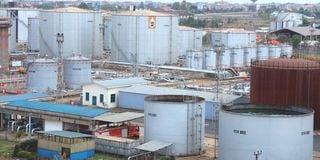
Kenya Pipeline Company (KPC) petroleum storage facility in the Industrial area, Nairobi. 

Photo credit: File | Nation Media Group

A research note has questioned the State’s Sh153.8 billion valuation of the Kenya Pipeline Company (KPC), casting doubts on the ability of the government to raise Sh100 billion from a stake sale through an IPO before March.

Standard Investment Bank (SIB) has placed its fair value estimate of the business at Sh102 billion, putting expected proceeds from the three-quarter stake sale at a lower Sh66.3 billion.
The State had aimed to raise at least Sh100 billion from the sale of a 65 percent stake, valuing the firm at Sh153.8 billion.

The investment bank, however, notes that the valuation of the company could be much larger upon the integration of new disclosures, including a revaluation of assets such as land or improved financial outcomes.

“As of June 30, 2024, KPC closed at a book value of Sh89 billion with Sh77 billion of the book value being retained earnings,” SIB said in a report.

“The business generated net earnings of Sh6.9 billion in the period, translating to a return on equity (RoE) of 7.7 percent and closed at a cash position of Sh6.5 billion. Our back-of-the-envelope calculations, looking at the book value of similar businesses in the broader oil and gas sector, placed the fair value estimate of the business at Sh102 billion or a price to book ratio of 1.2 times.”

The price-to-book ratio (P/B) measures the market valuation of a company relative to its book value by subtracting the entity’s total liabilities from total assets.

Questions on the valuation of KPC and the legality of the government’s divestiture draw parallels to the 2008 Safaricom IPO, which was not only marred by controversy but also saw doubts on an ambitious valuation.

The government sold a 25 percent stake in the telecom operator for Sh103.3 billion ($800 million).

SIB says it assessed the valuation of KPC by comparing the average price of similar firms in the oil and gas sector across Africa and the Middle East—the relative valuation method.

The State’s valuation of KPC has been deemed ambitious, even with the upside potential.

“This means that the goal of the government might be ambitious, but it is also very possible,” said SIB Senior Research Associate Wesley Manambo.

“KPC has a strong growth story, but it is already a mature business with a very strong cash position. Leaning on our understanding of intrinsic valuation, we tend to believe that the value of the business based on its ability to generate cash may be significantly higher.”

Mr Manambo adds that while value could lie in the eyes of the beholder, differing from one investor to another, the underlying performance of a firm does, over time, reflect on the true price of its stock.

“A good company with a good strategy will show in the numbers. Prices will always follow the fundamental view.”

A fresh valuation of KPC will be contained in the IPO prospectus, which will be prepared by the selected transaction adviser.

The Office of the Auditor General is also expected to audit the privatisation process and submit a report to the National Assembly within six months of completing the process.

The Privatisation Commission is to ensure that liabilities and risks affecting the valuation of KPC are comprehensively assessed.

The Treasury is expected to utilise proceeds of the IPO to fund development expenditure, pending bills or liability management.

The Treasury has mulled the creation of new KPC shares to not only reach its target of mobilising Sh100 billion but also broaden ownership among retail/individual investors.

PAYE Tax Calculator

Note: The results are not exact but very close to the actual.