Small distillers spared costly factory upgrades in tax cheats war

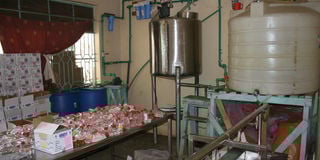
An alcohol distillery plant in Kisumu.

Photo credit: File | Nation Media Group

Small-scale alcohol distillers have been spared costly factory fittings such as cameras and flow meters which are required by the Kenya Revenue Authority (KRA) to help deter tax cheats.

In changes through the newly signed Finance Act 2025, the Treasury said that “micro distillers” are now exempt from fitting surveillance equipment for tax monitoring purposes—handing a relief to entrepreneurs striving to have a piece of the alcohol beverage pie.
“Section 25 of the Excise Duty Act is amended by inserting the following new subsections immediately after subsection (2) −(2A) Notwithstanding subsection (1)(a), a licensed micro-distiller shall be exempt from the requirement for automation, continuous piping, and the use of mass flow meters,” said the Finance Act. “(2B) Production volume of such a licensed micro distiller shall be ascertained and monitored through the use of excise stamps or such other mechanism as the commissioner may prescribe by notice in the gazette,” it added.

The Finance Act defines a “micro distiller” as a manufacturer of a spirituous liquor beverage through two fundamental processes of fermentation and distillation using a still or boiler not exceeding 1,800 litres and whose annual production volume does not exceed 100,000 litres.

The changes are a boon for the micro distillers because they are now spared from investing substantial capital expenditure in equipment to monitor production for the purposes of payment of excise duty.

KRA about three years ago introduced mandatory requirements that alcohol manufacturers fix surveillance equipment including flow meters and closed-circuit television cameras in their factories.

The taxman said the equipment would help enhance revenue collection and fight tax evasion by monitoring production volumes and tracking excisable goods to guarantee accurate assessment of tax dues.

Taxes payable by small distillers will now be monitored through the Excisable Goods Management System (EGMS) using excise stamps.

The EGMS is currently operated using excise stamps provided by Swiss security printer Sicpa SA and covers a wide range of excisable products including beer, soda, cosmetics, cigarettes, and bottled water.

Under the contract, Sicpa prints and supplies excise stamps complete with a track and trace system. It also includes the delivery of an integrated production accounting system.

KRA started to affix excise stamps on excisable goods in 2003 to track the goods across the value chain and seal revenue leakages. The first phase of the excise stamps regime saw the stamps affixed on tobacco. In 2007, the government expanded the scope to include wines and spirits.

KRA in 2012 introduced the track and trace system through the EGMS. This initially covered only tobacco, wines, and spirits. At the factory level, EGMS enables KRA to tally and tag all products with a unique electronic code for subsequent tracking.

Alcohol and cigarettes are traditionally the largest contributors to the excise duty receipts, accounting for more than three-quarters of KRA collections.

PAYE Tax Calculator

Note: The results are not exact but very close to the actual.